This article contains advertising.
Yoshinoyama, in the mountains of Nara, is Japan’s most famous cherry-blossom mountain. I travelled there by bus from Nagoya, ate a spring bento on board, and spent a day walking through blossoms that cover the whole mountain. The day I visited — April 8 — was Hana Matsuri, the Buddha’s birthday, and I also came across a sweet-tea celebration and a ceremony of yamabushi mountain monks.
- Staying connected in Japan
- 1. Leaving Nagoya — By Bus to Yoshinoyama
- 2. A Bento on the Bus — Mackerel Sushi and Sakura Mochi
- 3. The Cherry blossoms(Sakura) of Yoshinoyama — A Mountain of Senbonzakura
- 4. Walking the Temple Town — The Kuromon Gate and Sakura Taiyaki
- 5. The Yamabushi Ceremony
- 6. Hana Matsuri and Sweet Amacha Tea
- 7. Kinpusen-ji — The Zao-do Hall
- 8. At the End of the Walk
Staying connected in Japan

An eSIM is the easiest way to have mobile data from the moment you land in Japan — no pocket Wi-Fi to pick up, and no SIM card to swap. I recommend Yesim, a Japan eSIM with 5G (from US$3.85 a day).
Watch the video version of this walk here:
1. Leaving Nagoya — By Bus to Yoshinoyama
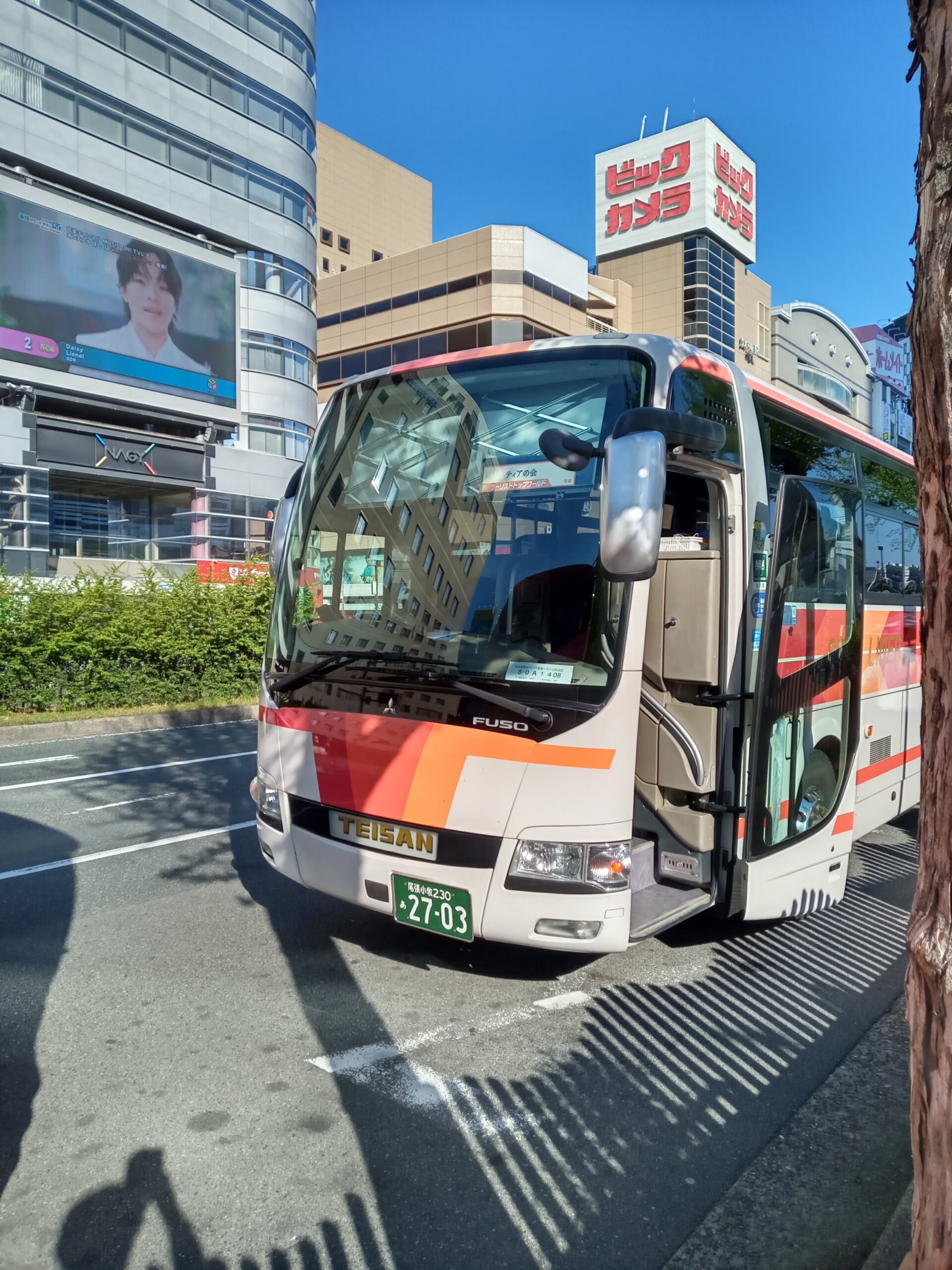
The journey began in front of Nagoya Station, where I boarded a bus bound for Yoshinoyama. It was a relaxed trip, watching the scenery drift past the window.
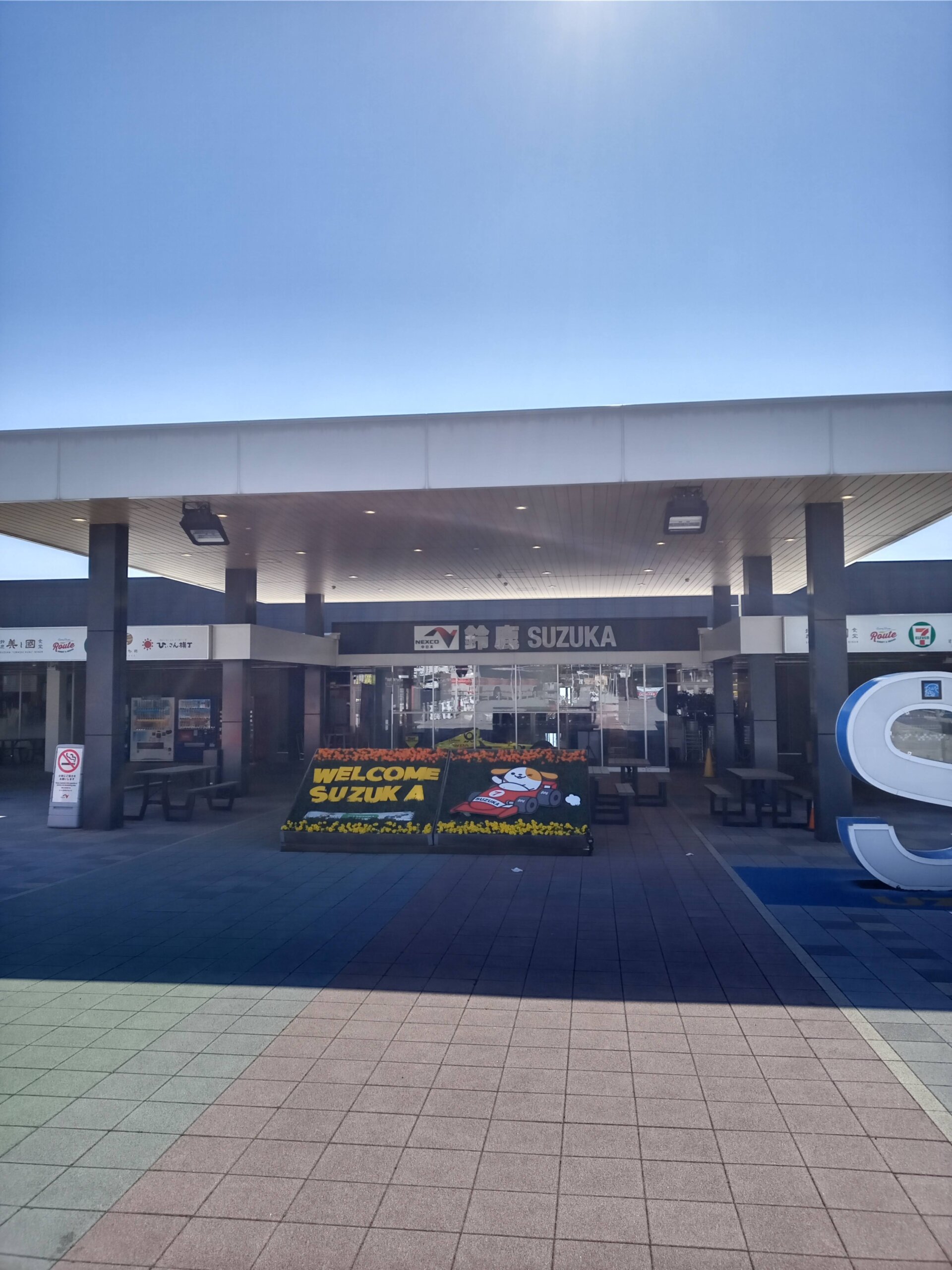
On the way, we stopped for a rest at Suzuka Service Area. These little stops along the road are part of the pleasure of travelling by bus.
2. A Bento on the Bus — Mackerel Sushi and Sakura Mochi
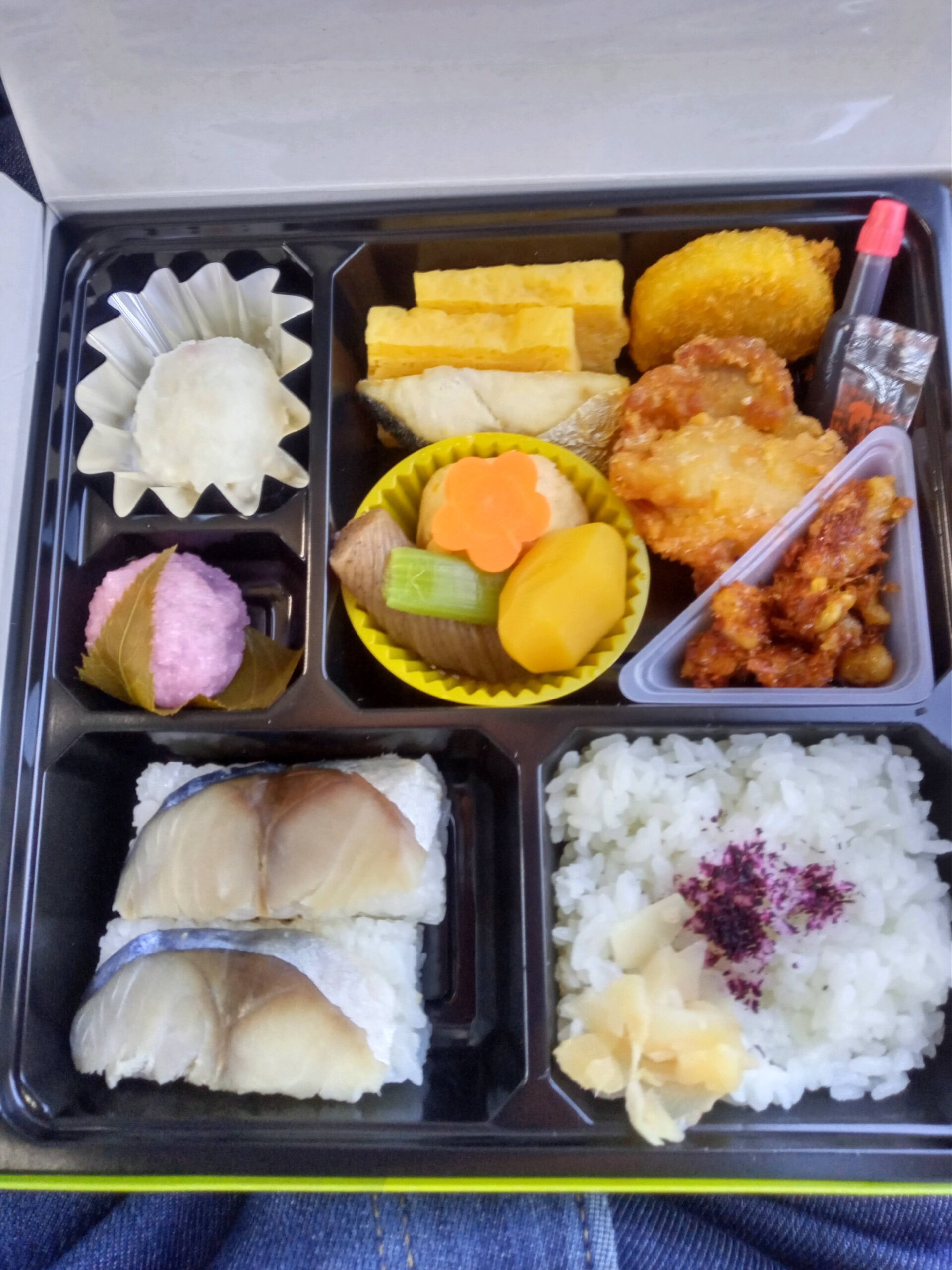
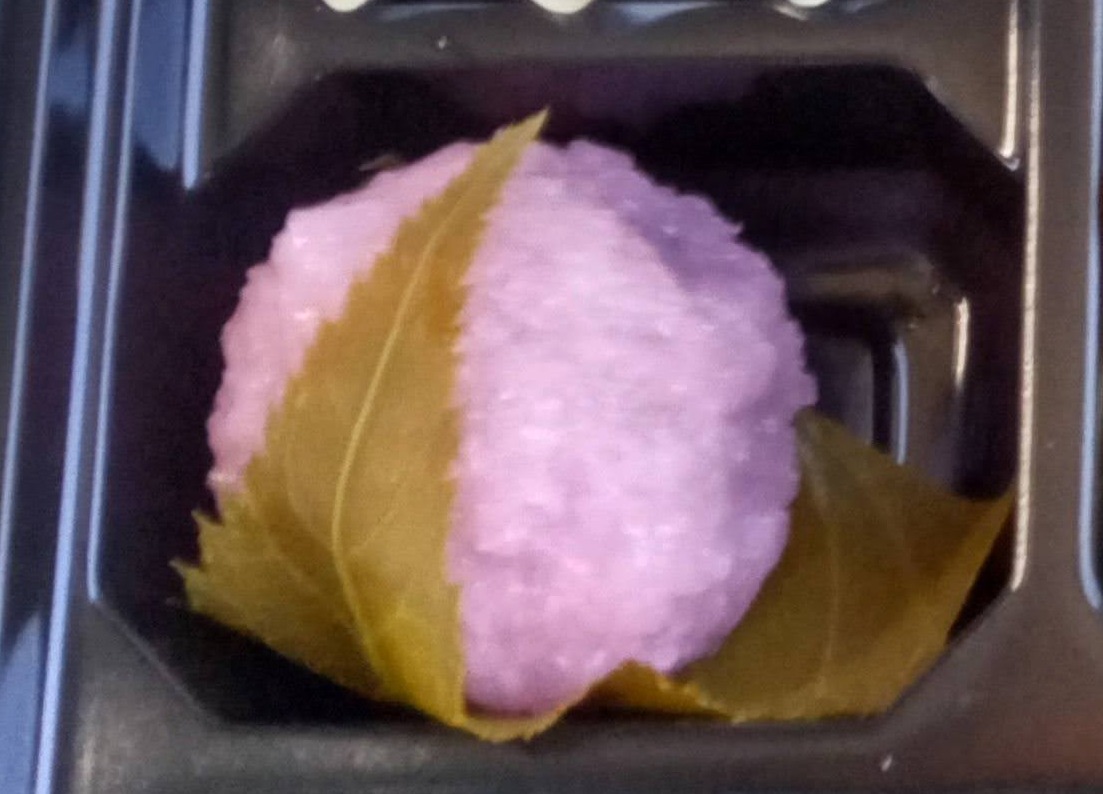
Lunch was a bento eaten on board: mackerel sushi and sakura mochi, the pink rice cake wrapped in a cherry leaf. A spring lunch box made for the cherry-blossom season.
3. The Cherry blossoms(Sakura) of Yoshinoyama — A Mountain of Senbonzakura
Arriving at Yoshinoyama, the whole mountain opened up before me, covered in cherry blossoms. Some 30,000 cherry trees grow here, and Yoshino’s blossoms are famous for the way they bloom upward from the foot of the mountain — Shimo-senbon (“the lower thousand trees”) first, then Naka-senbon, Kami-senbon, and finally Oku-senbon at the top.
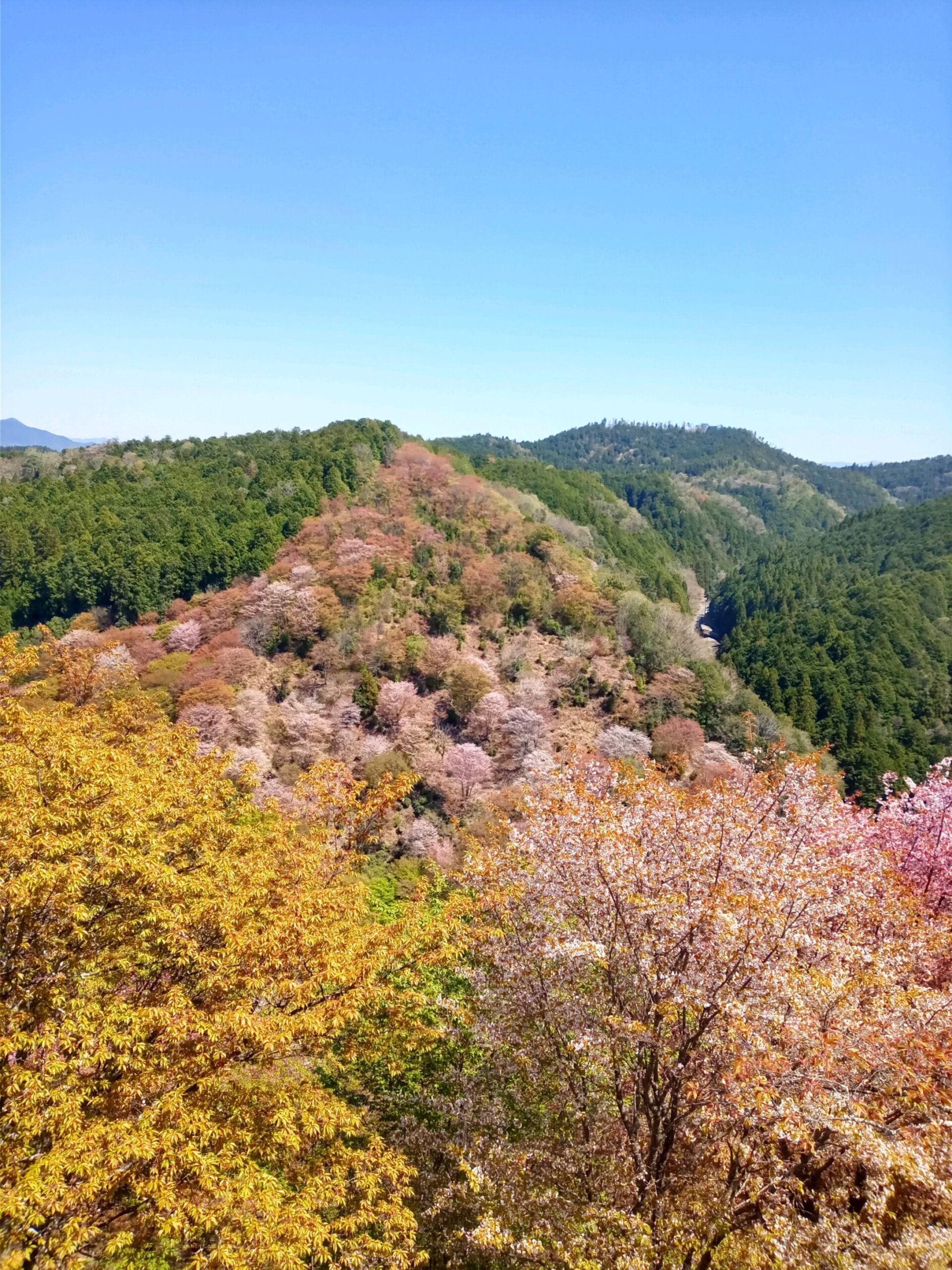
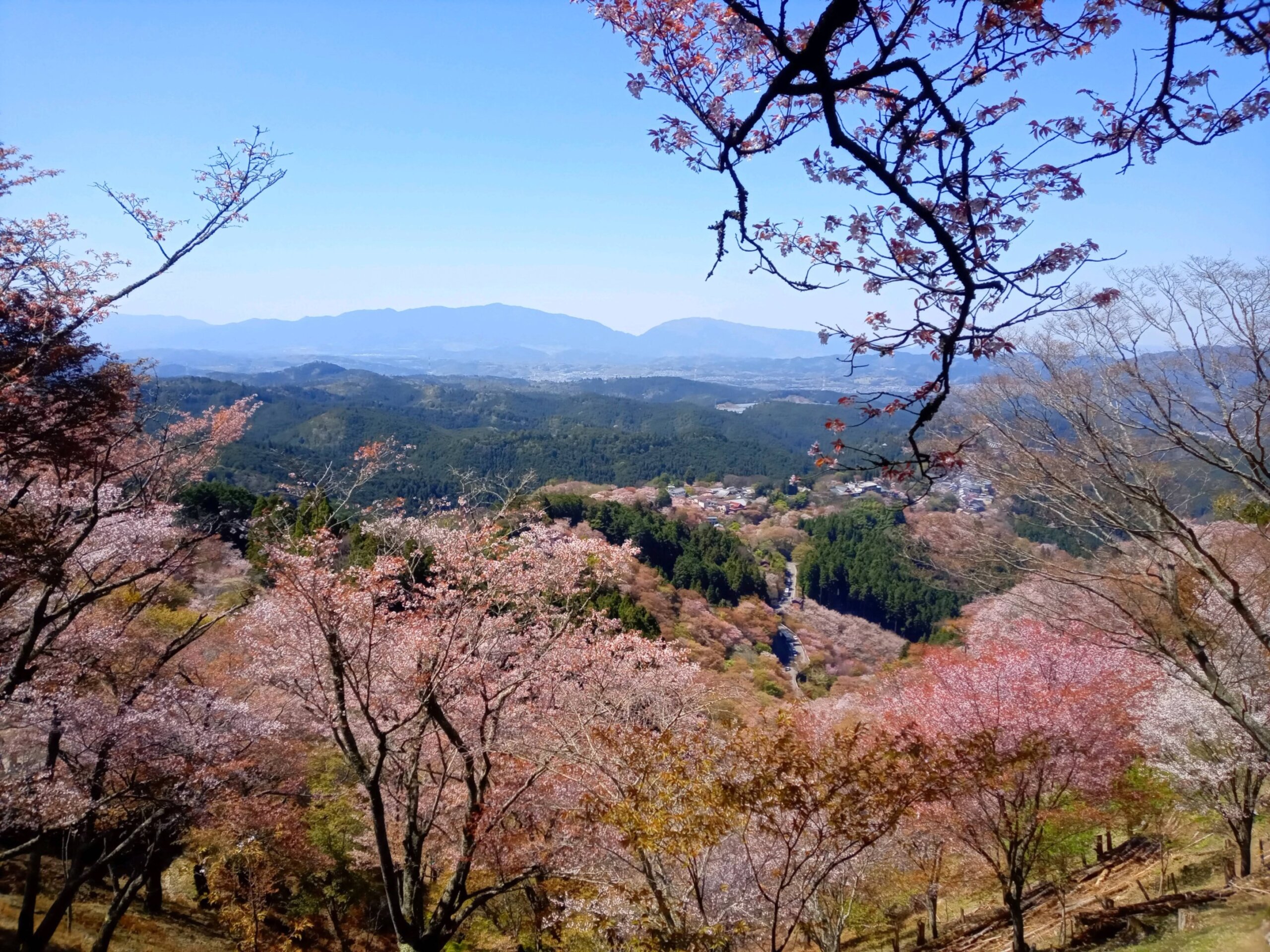
The view from Kami-senbon was one of the finest of the whole trip: a sea of blossoms, with ridge after ridge of mountains beyond.
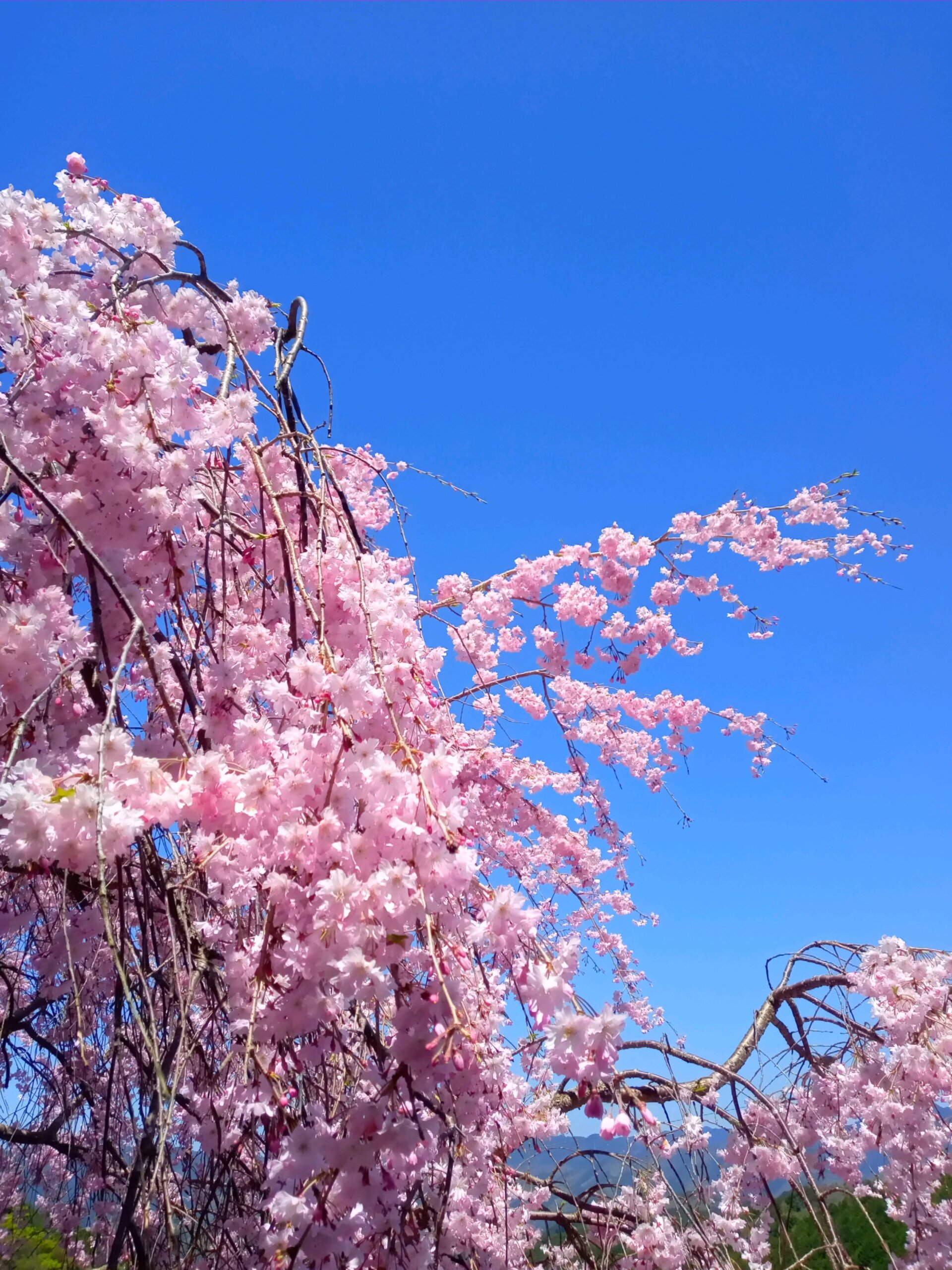
And here is a weeping cherry tree up close — pale pink flowers swaying in the spring light.
4. Walking the Temple Town — The Kuromon Gate and Sakura Taiyaki
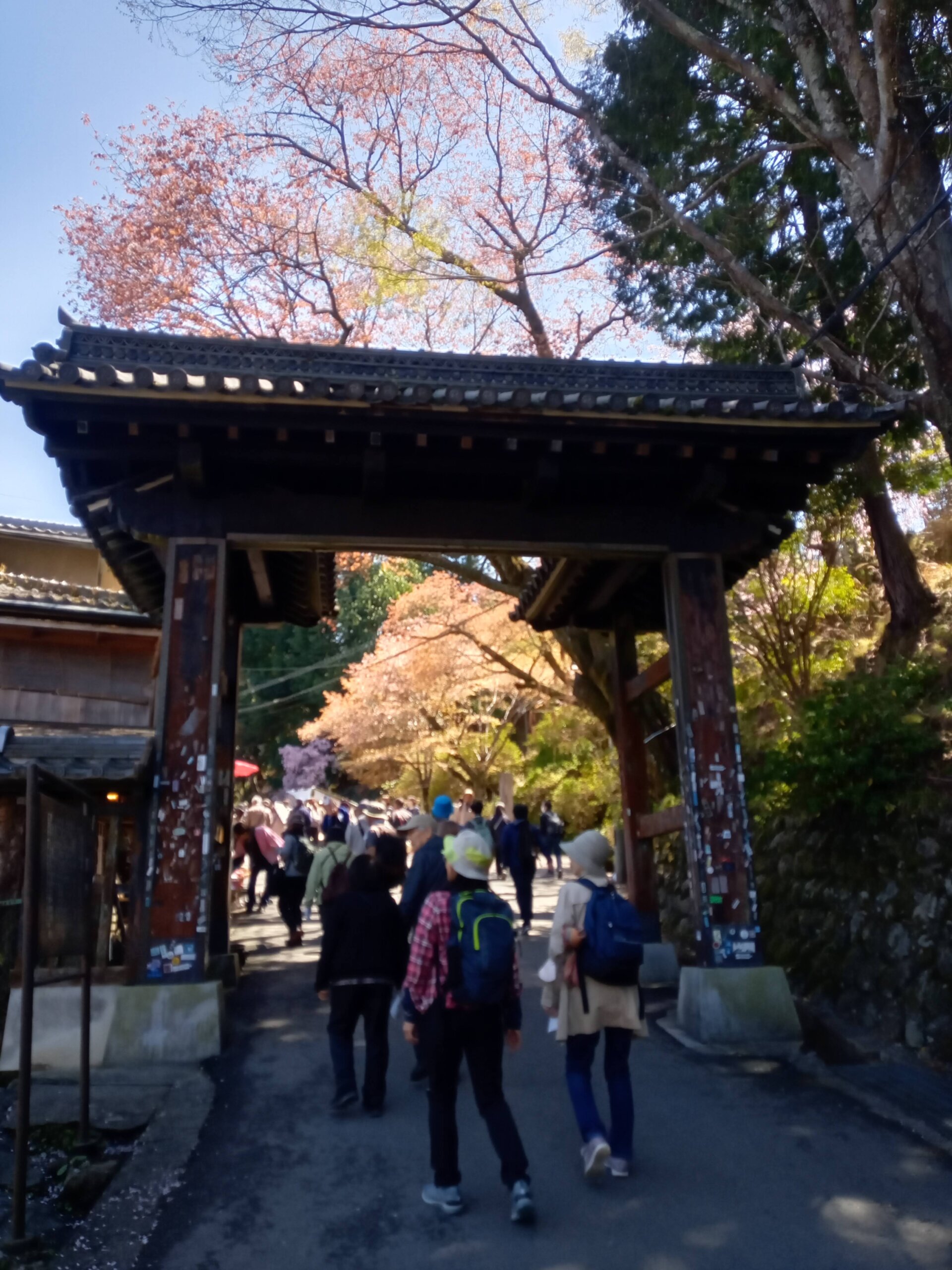
From the blossoms I walked down into the temple town. Passing through the Kuromon, the Black Gate, I followed the street of souvenir shops and small restaurants, looking up at the cherry trees as I went.
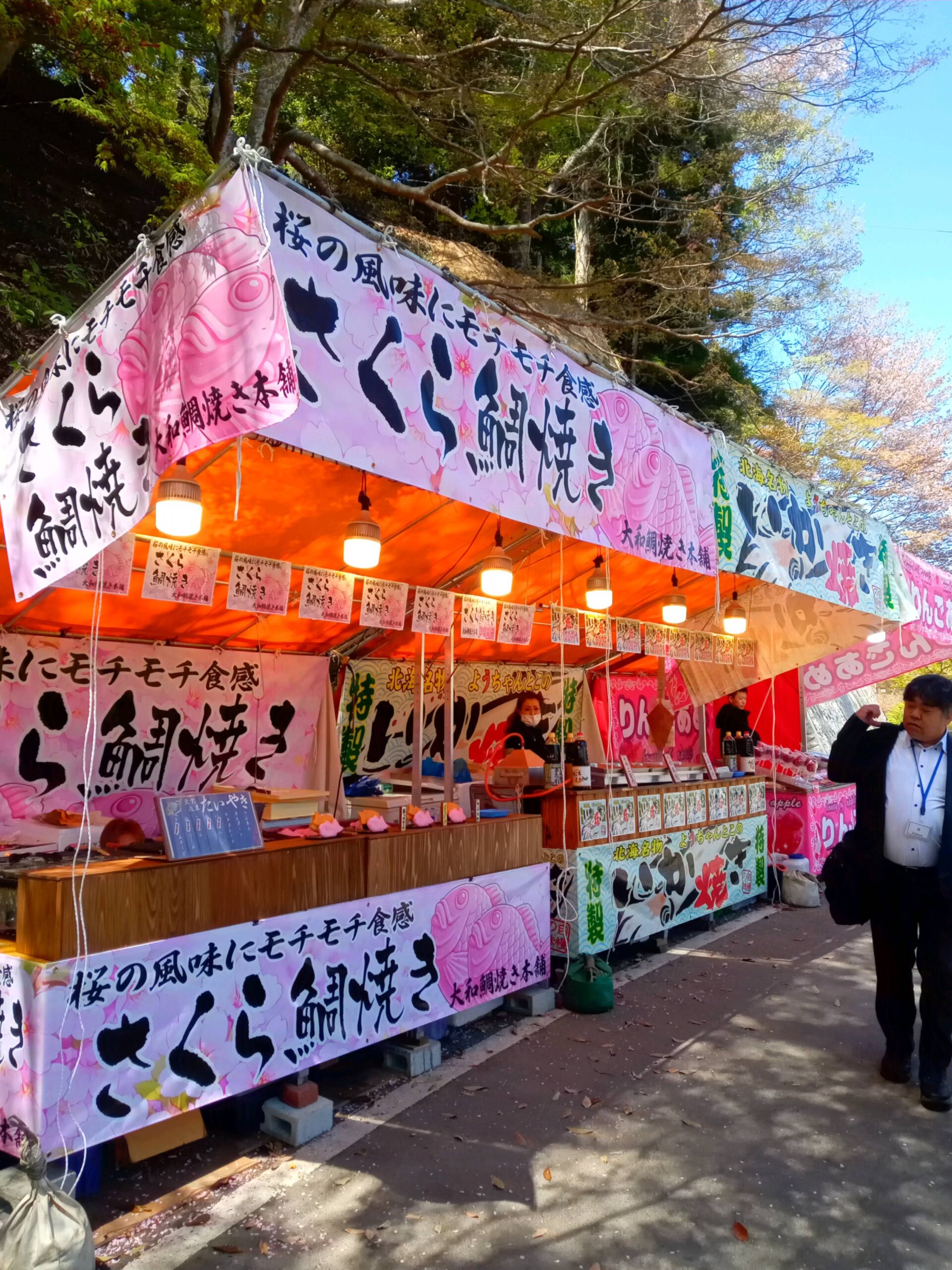
At a food stall I found sakura taiyaki — the fish-shaped cake turned a gentle pink, sold only in cherry-blossom season.
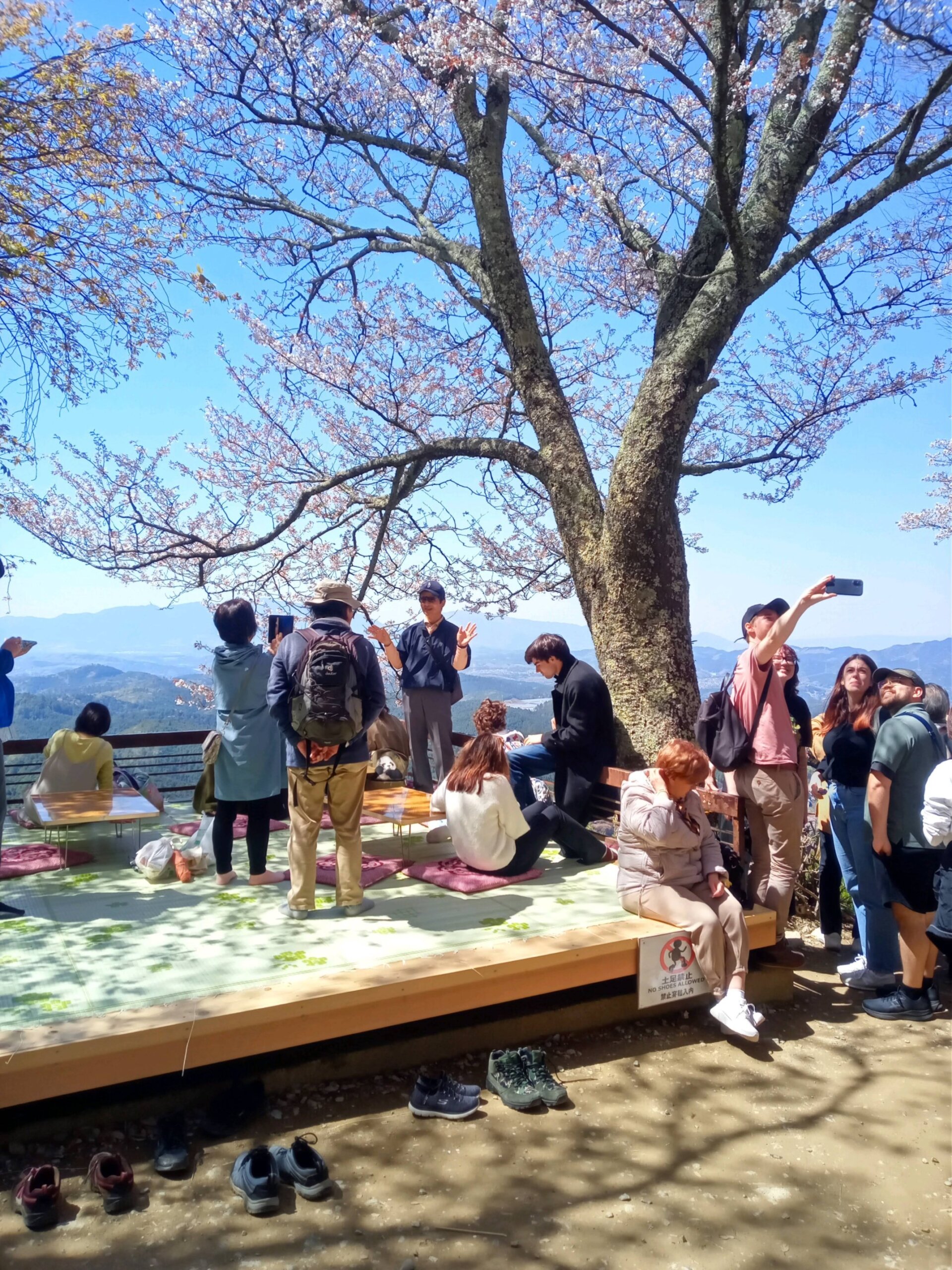
At a viewpoint along the way there was a rest area floored with tatami mats — a place to sit down, gaze at the blossoms, and take the day slowly.
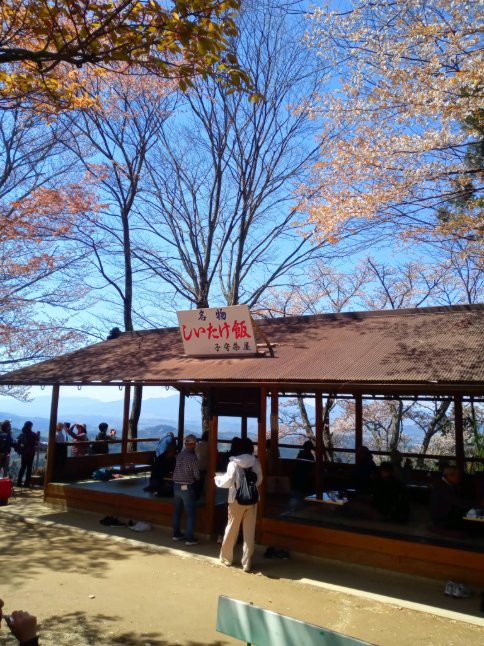
One of the tastes of Yoshinoyama is the tea houses’ shiitake-meshi — rice cooked with shiitake mushrooms. After a long walk, a bowl of warm rice was very welcome.
5. The Yamabushi Ceremony
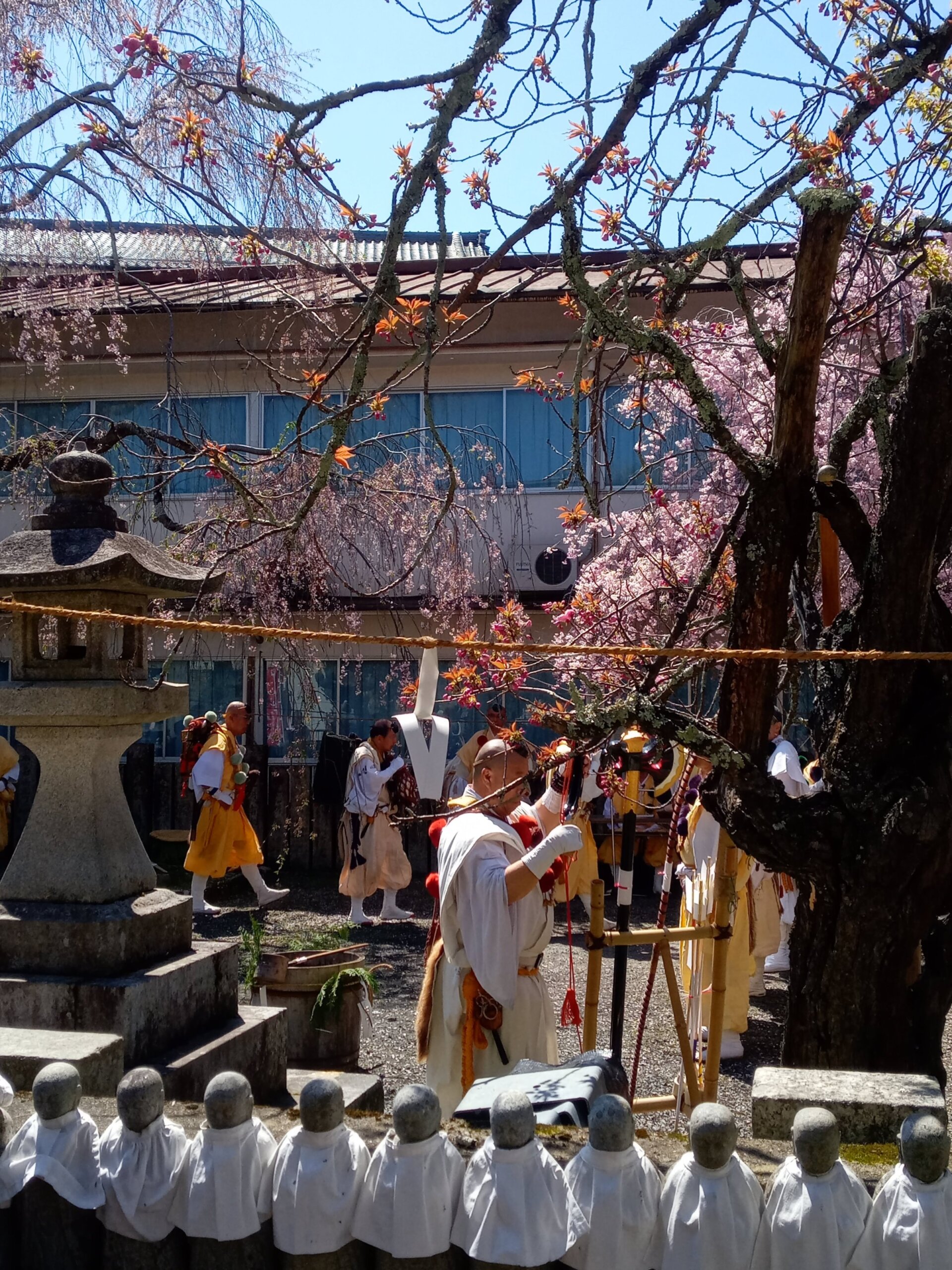
That day, a ceremony of yamabushi — the mountain monks of Shugendo — was also being held at Yoshinoyama. The procession advanced to the sound of the horagai conch shell. Yoshino has been a sacred mountain of Shugendo for well over a thousand years, and this was a sight you could see nowhere else.
6. Hana Matsuri and Sweet Amacha Tea
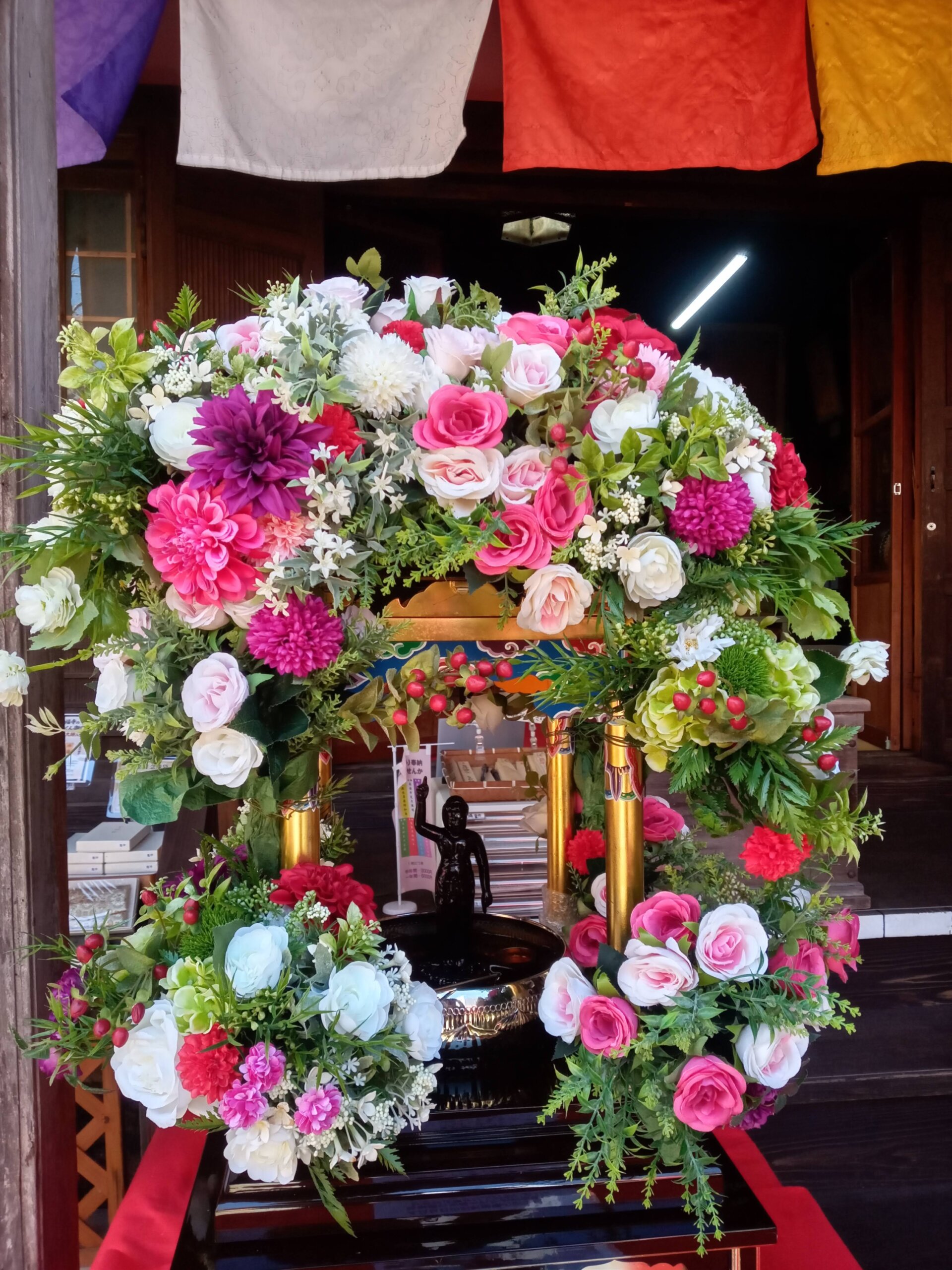
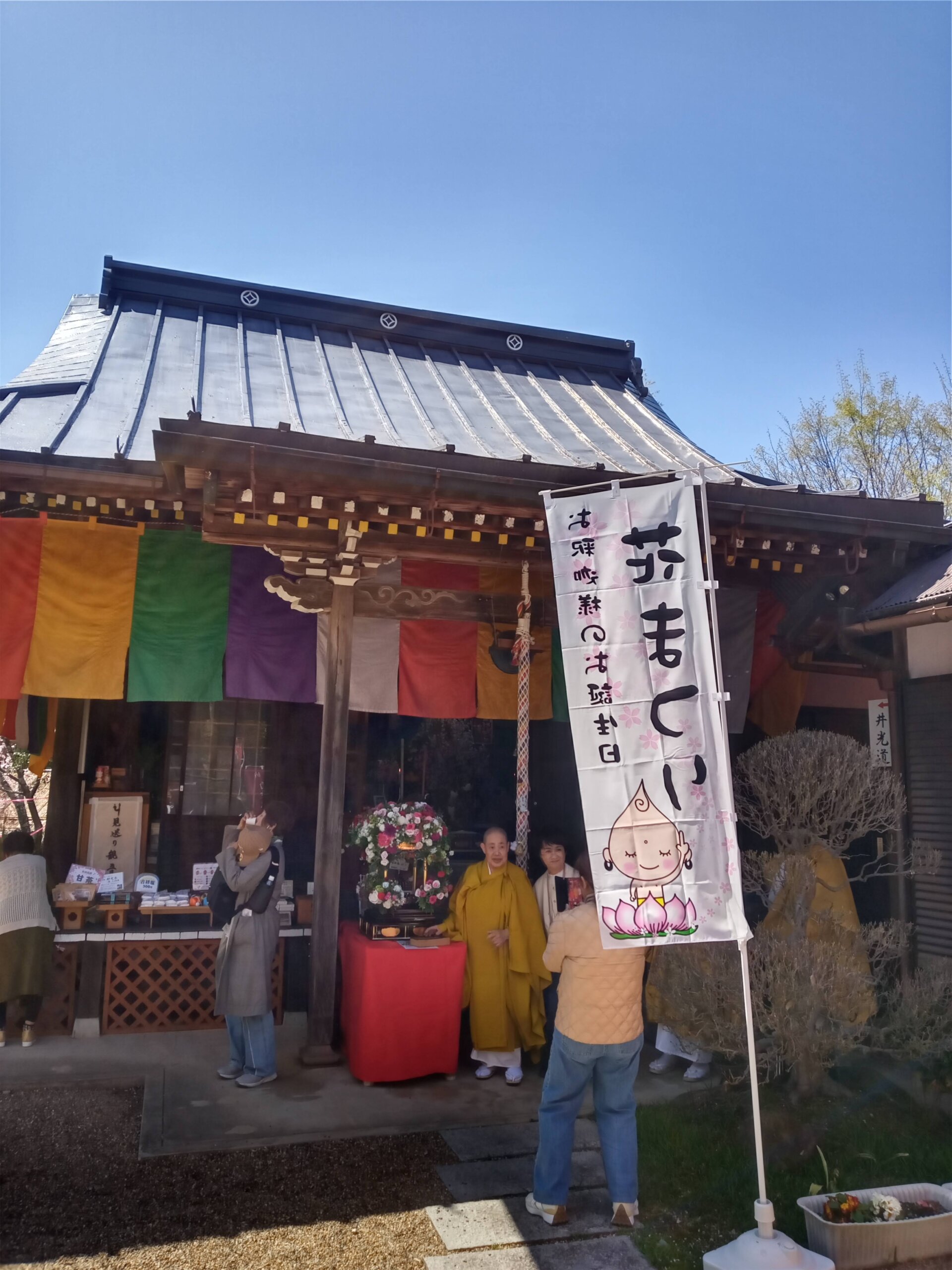
April 8 is Hana Matsuri, the Buddha’s birthday. Yoshinoyama was celebrating too, and visitors could take part in the amacha tradition. Amacha is a slightly sweet tea that is poured over the statue of the newborn Buddha in a flower-decorated hall, in memory of the sweet rain said to have fallen at his birth — and guests are offered a taste of it as well.
7. Kinpusen-ji — The Zao-do Hall
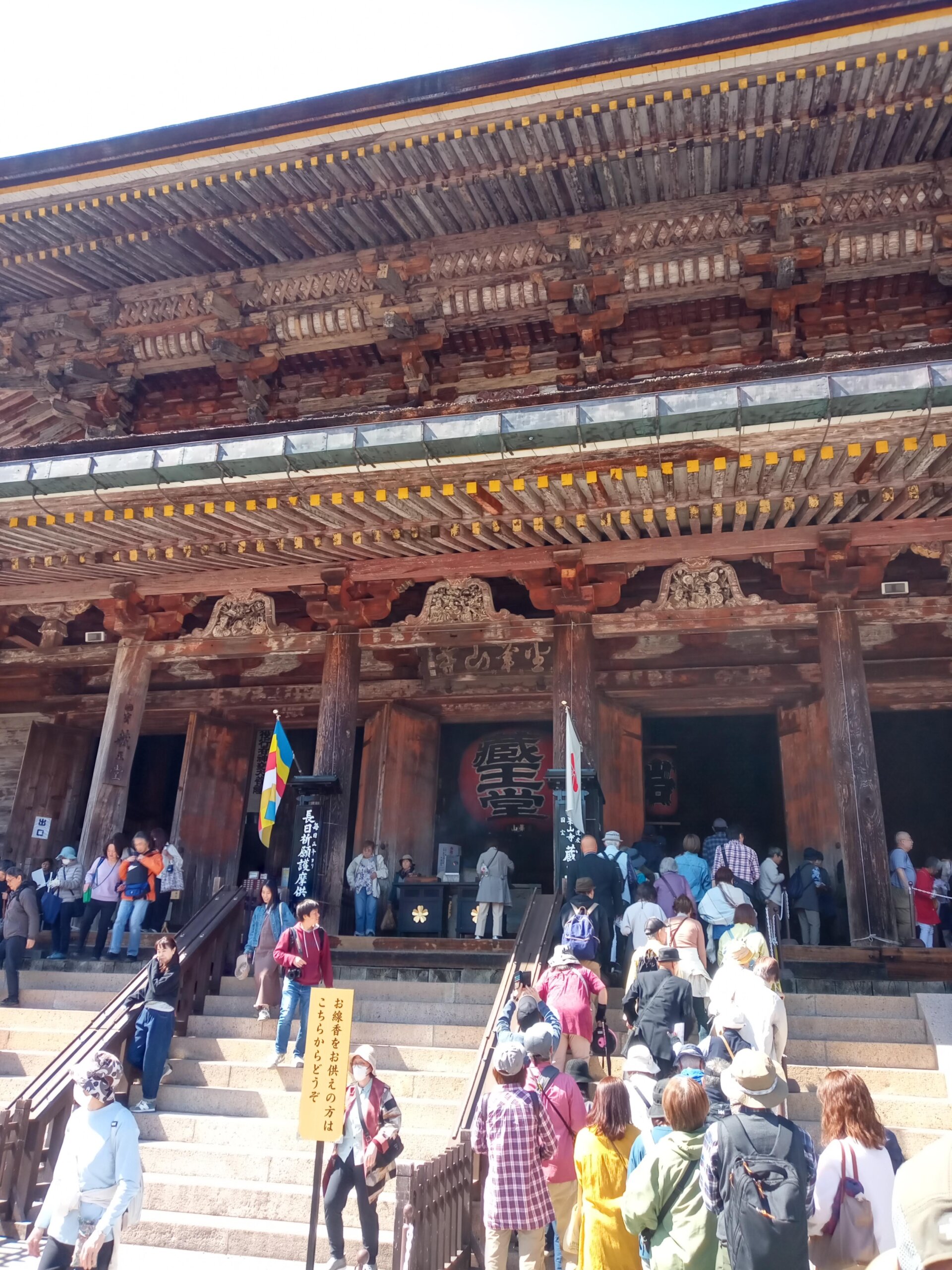
At the heart of Yoshinoyama stands Kinpusen-ji, the head temple of Shugendo. Its great hall, the Zao-do, is one of the largest wooden temple buildings in Japan and the symbol of Yoshino. Surrounded by cherry blossoms, it is one of the defining views of spring here.
8. At the End of the Walk
A bus journey, a bento on board, a mountain covered in blossoms, and then Hana Matsuri and the yamabushi. Spring at Yoshinoyama is not only about cherry blossoms — it felt like the Japanese spring itself, all in one day.
Getting there
- This trip was by tour bus from Nagoya Station, with a rest stop at Suzuka Service Area on the way
- Yoshinoyama is in Yoshino, Nara. By train, take the Kintetsu line to Yoshino Station, then the ropeway or a bus up to the temple town
- The blossoms open from late March to mid-April, climbing the mountain in order: Shimo-senbon, Naka-senbon, Kami-senbon, then Oku-senbon
- If you visit around April 8, you can enjoy Hana Matsuri together with the blossoms
On my YouTube channel ORIBE, I post walking videos from all over Japan. Please take a look
if you like. → https://www.youtube.com/@OribeNippon


コメント