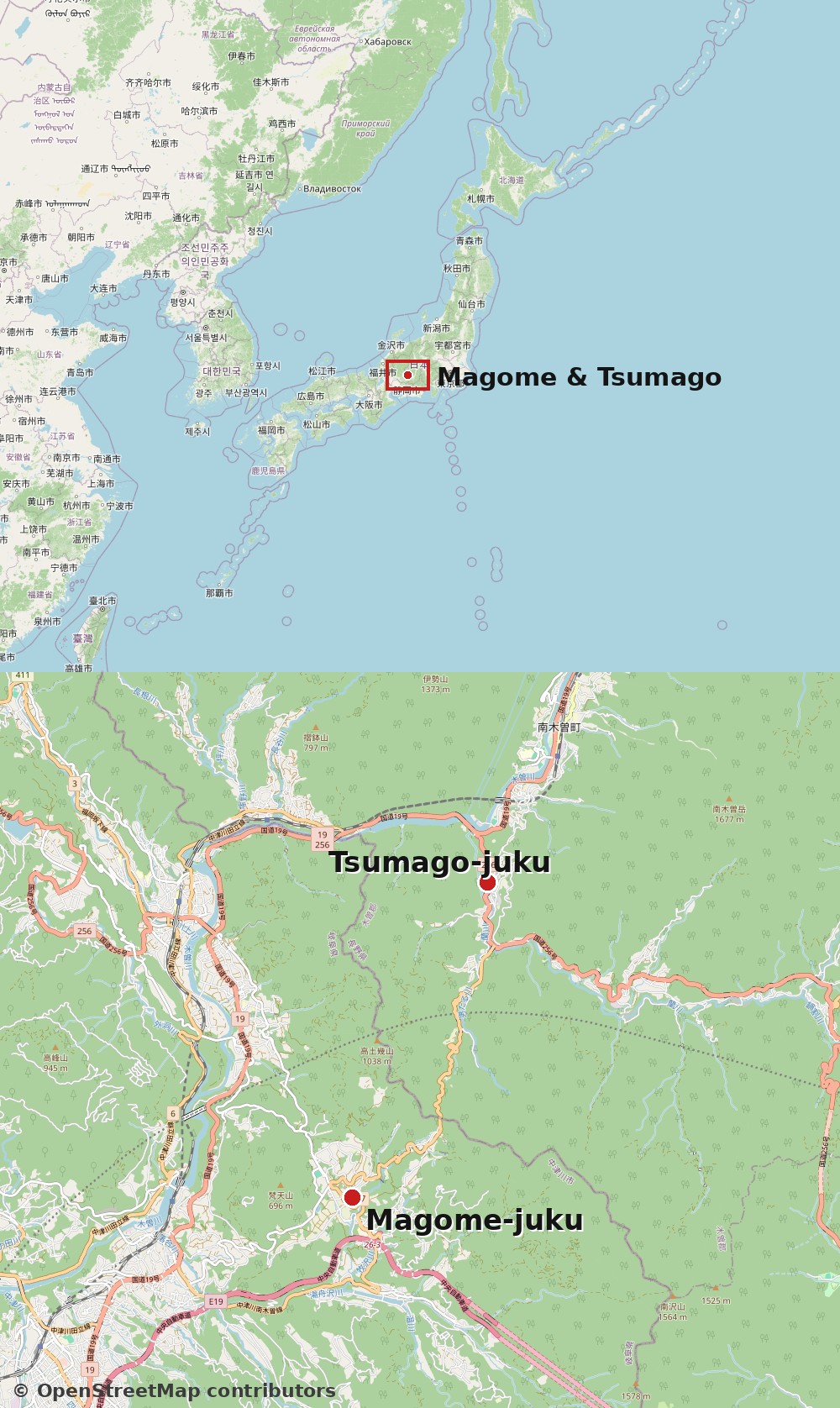
Of all the sections of the Nakasendo, the old highway that once joined Edo (Tokyo) and Kyoto across the mountains, the walk from Magome to Tsumago is the most loved. Stone-paved slopes, a great waterwheel, a forested mountain pass, and a tea house with a sunken hearth — in about 8–9 km, two and a half to three hours on foot, you walk straight into the Japan of the Edo period.
This is my record of that walk, on April 9, 2025.
This article contains advertising.
- Staying connected in Japan
- 1. Magome — A Stone-Paved Slope and a Waterwheel
- 2. Spring in the Post Town — Weeping Cherries and Warrior Dolls
- 3. The Kosatsuba and the Taste of the Town — Oyaki
- 4. The Stone Path through the Forest and Magome Pass
- 5. The Ichikokutochi Tea House — Great Beams and a Sunken Hearth
- 6. Tsumago — The Other Post Town
- 7. What Is the Nakasendo? — The Samurai Road
- 8. At the End of the Walk
Staying connected in Japan

An eSIM is the easiest way to have mobile data from the moment you land in Japan — no pocket Wi-Fi to pick up, and no SIM card to swap. I recommend Yesim, a Japan eSIM with 5G (from US$3.85 a day).
Watch the video version of this walk here:
1. Magome — A Stone-Paved Slope and a Waterwheel
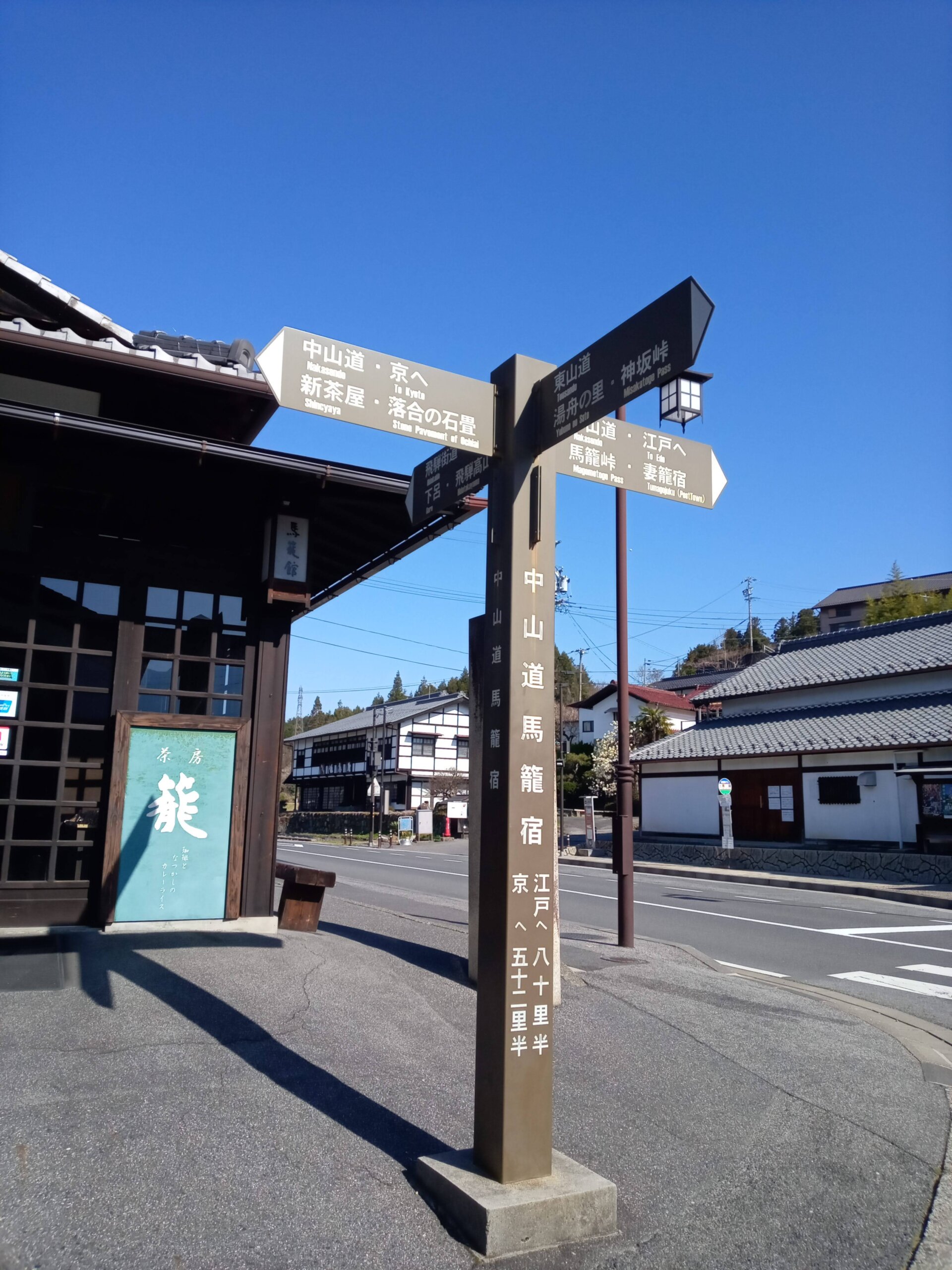
Magome is a post town built on a slope. Stone-paved streets run up the hill, lined on both sides with souvenir shops and places to eat.
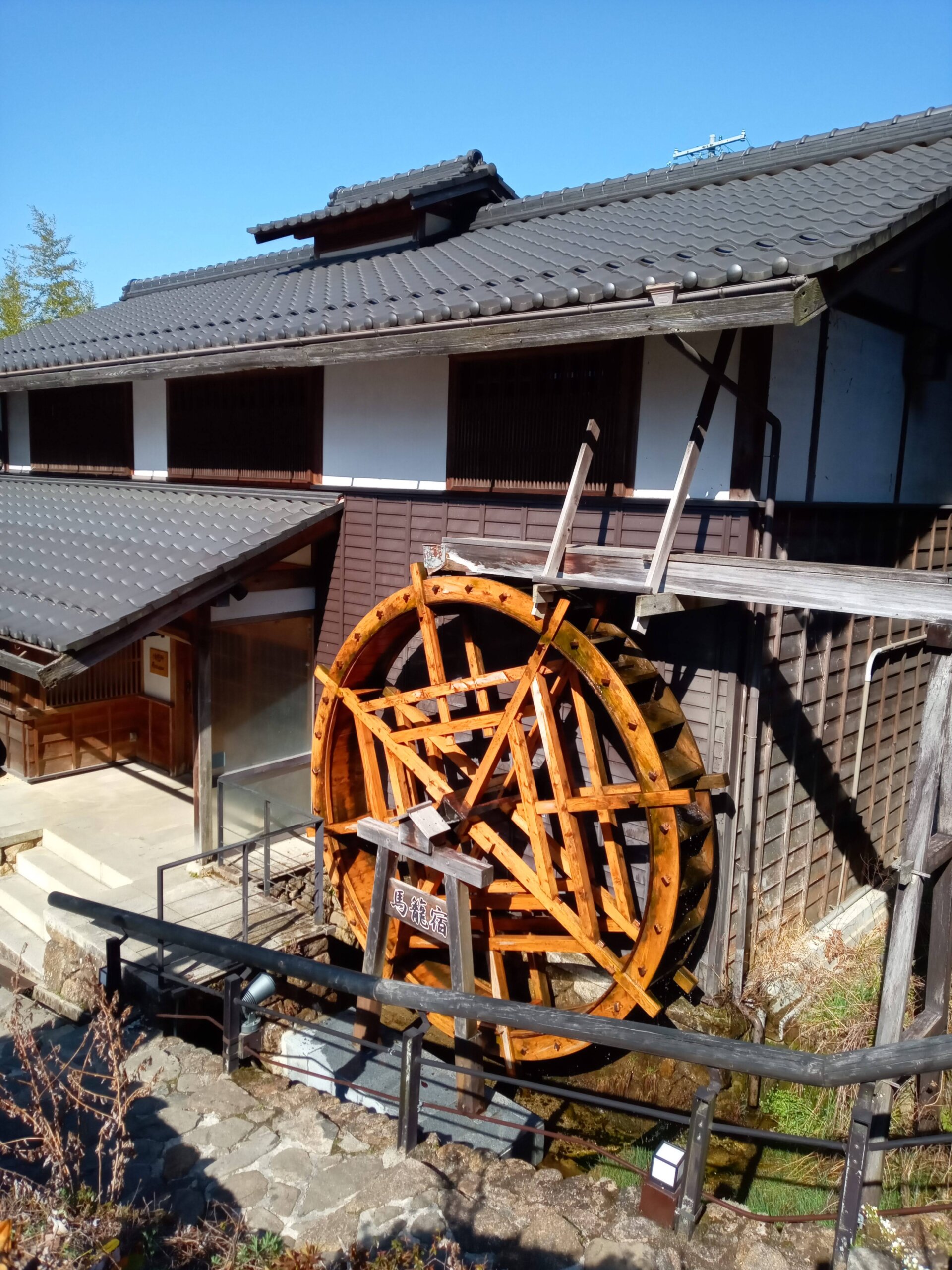
The symbol of the town is its waterwheel. Climbing the slope, you hear the sound of water before you see it.
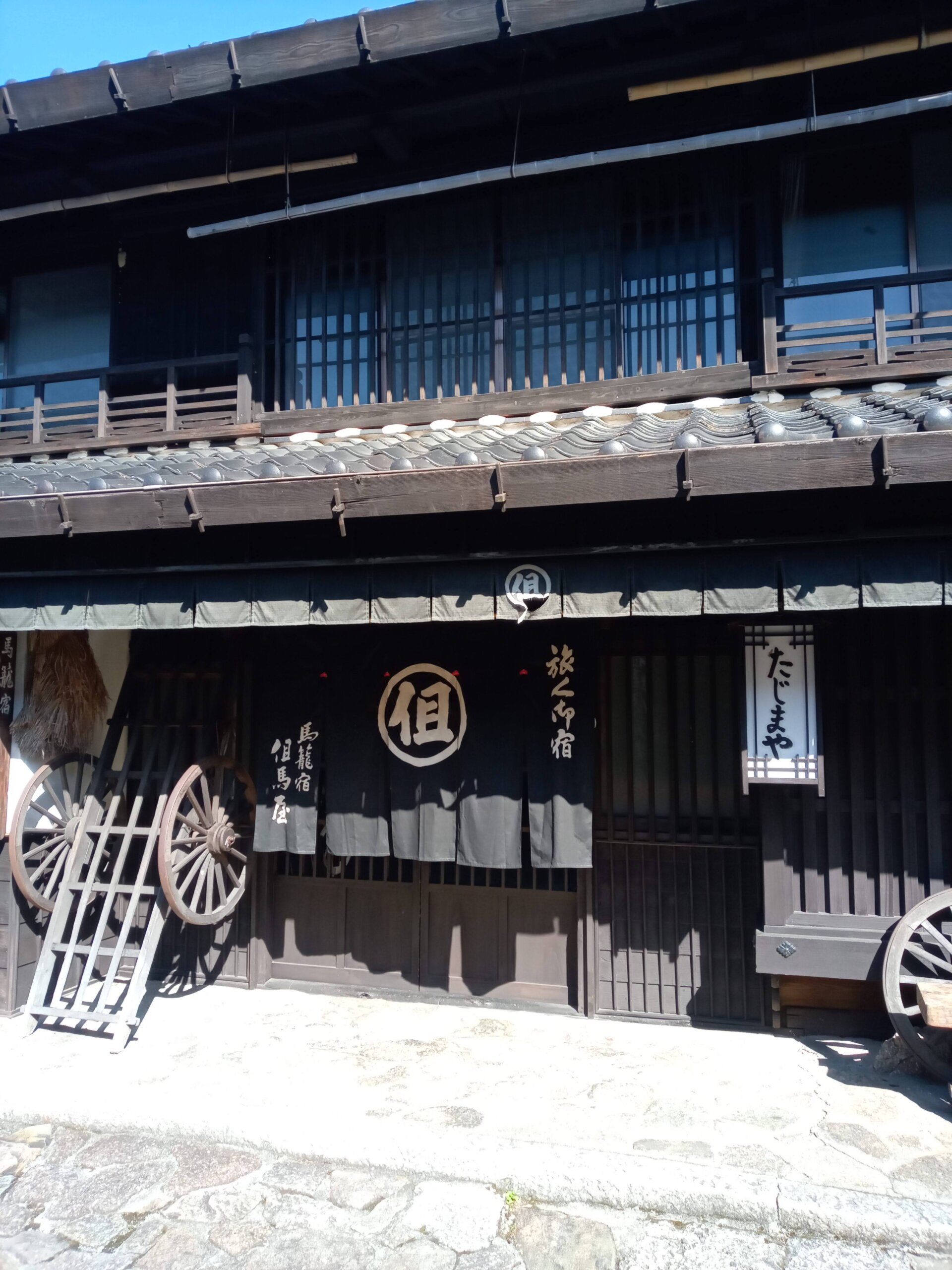
The noren curtain of Tajimaya, an old inn that has stood here since the Edo period, still hangs in the street — the face of the post town, unchanged.
The stone-paved slope is beautiful from above and from below alike. In spring, cherry blossoms add colour to the climb.
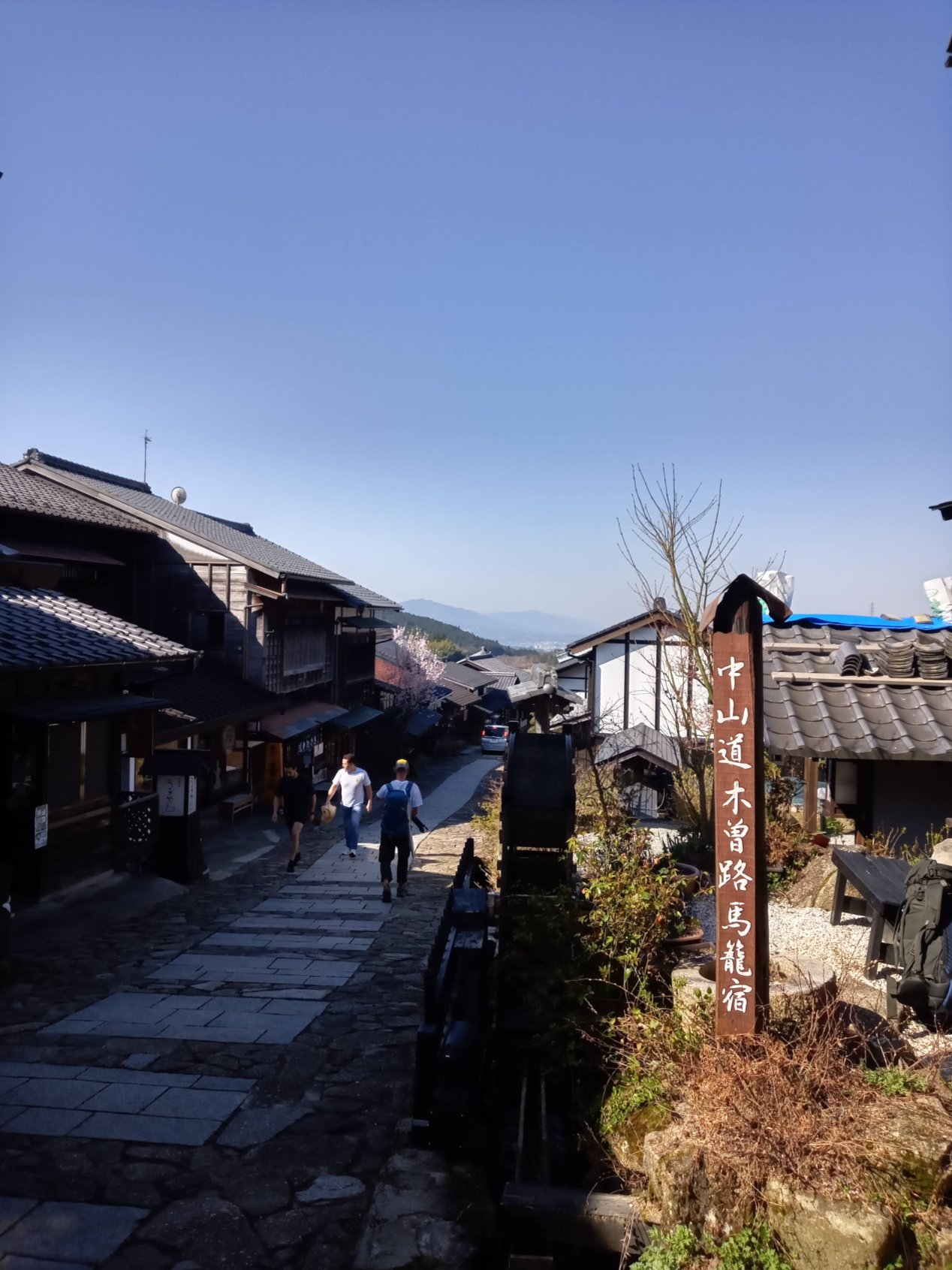
2. Spring in the Post Town — Weeping Cherries and Warrior Dolls
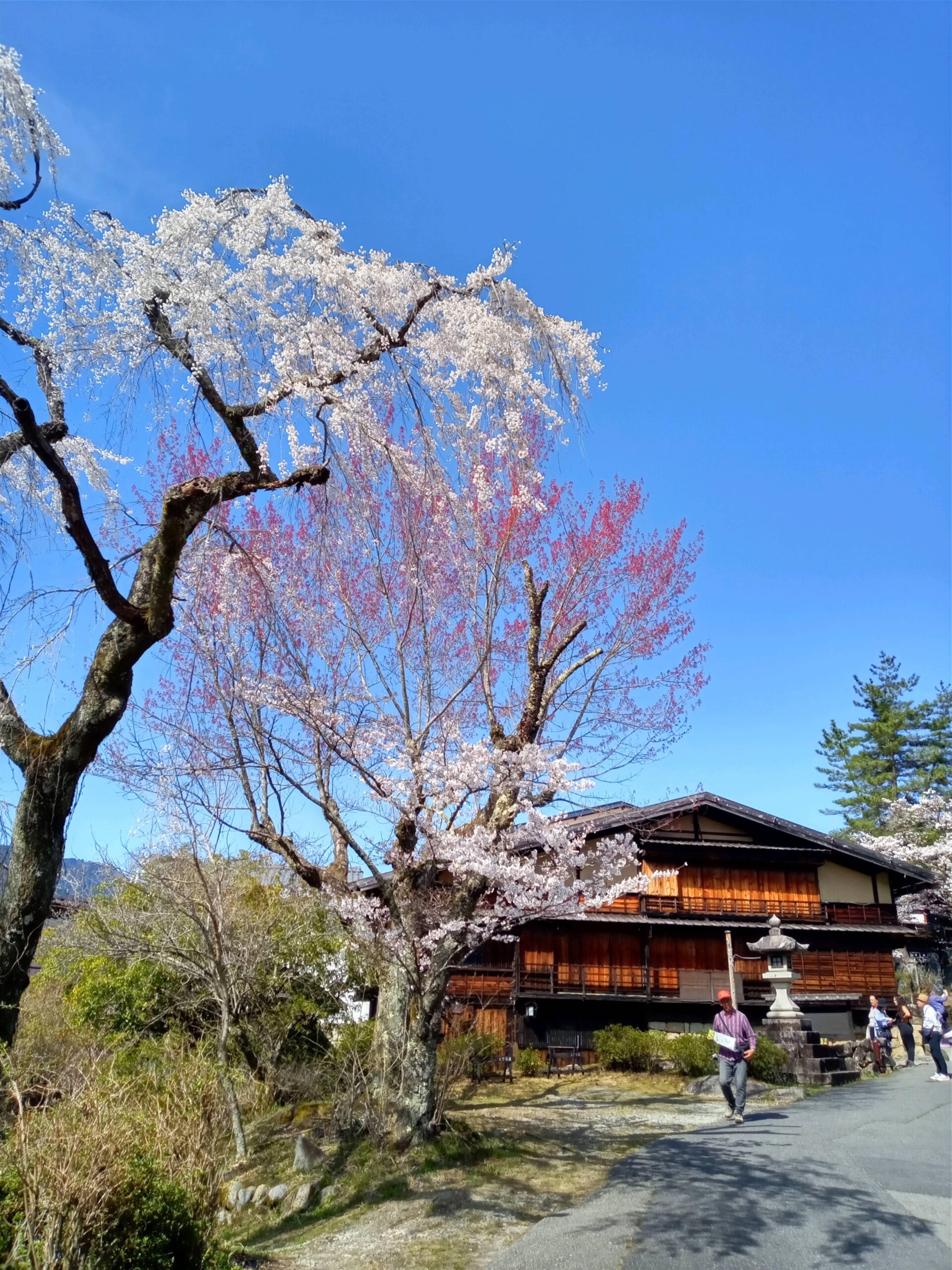
April in Magome is cherry-blossom season. Weeping cherry trees were in full bloom all over the town.
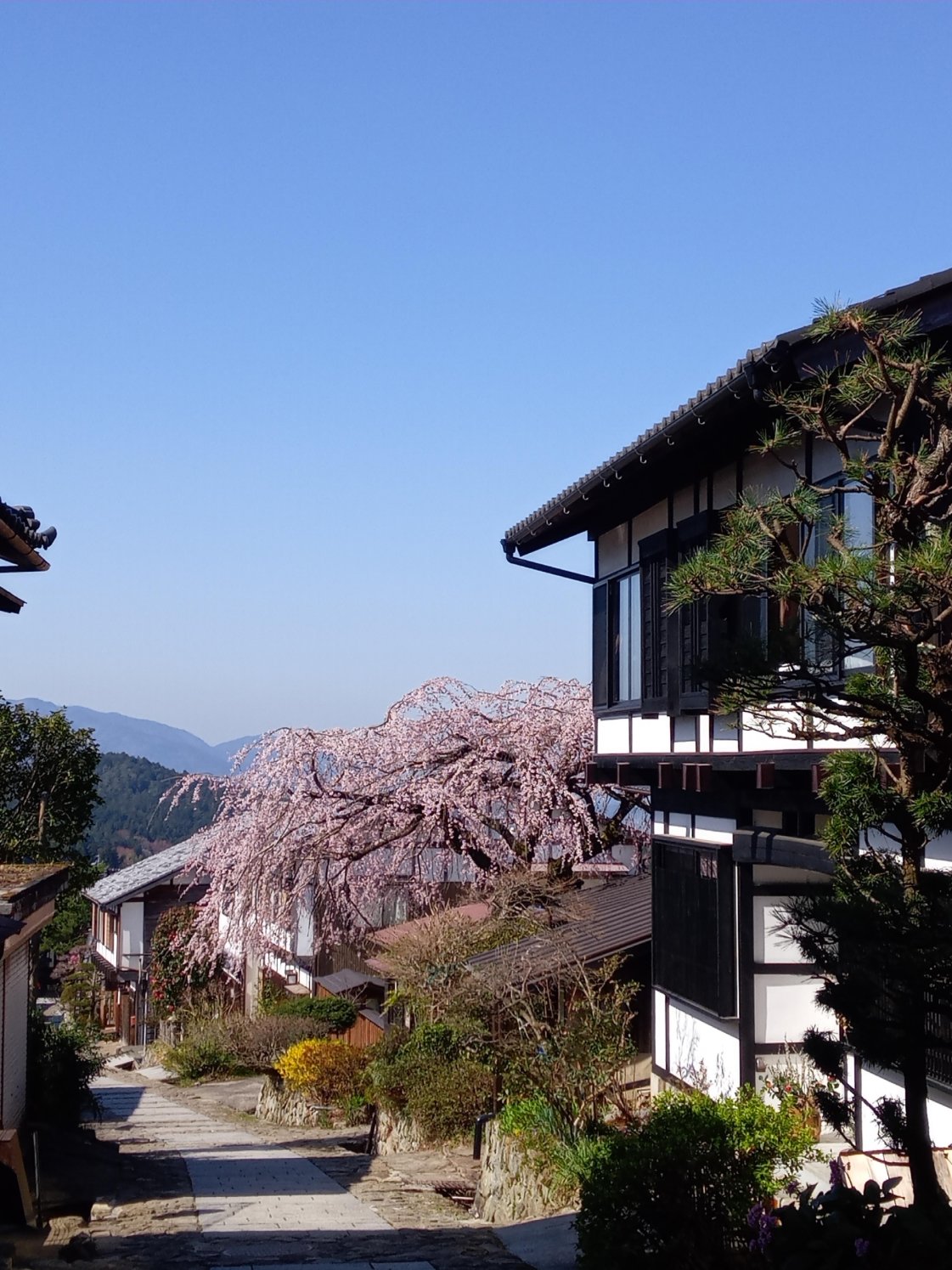
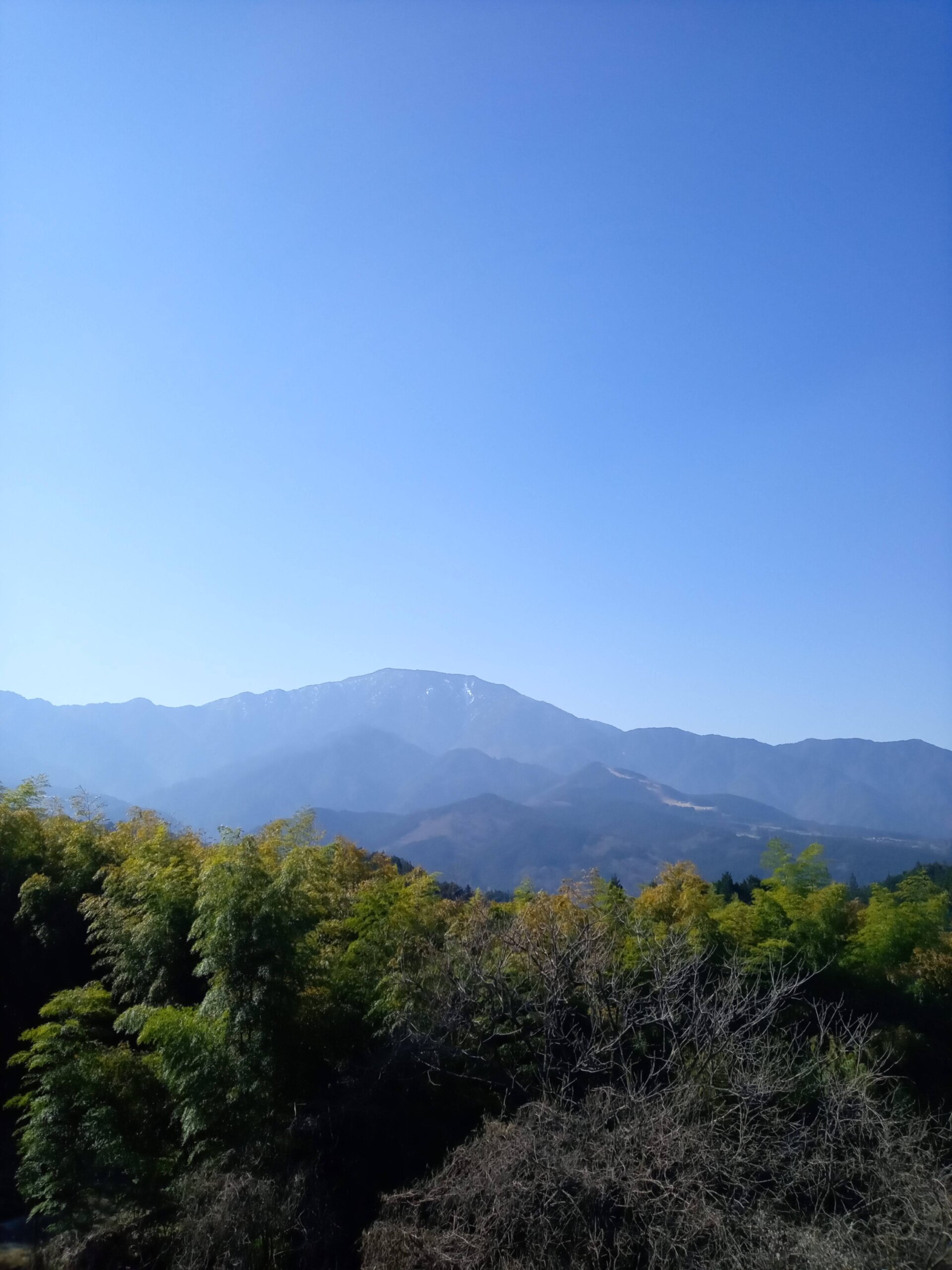
From the top of the slope, the view opens out over the rooftops of the town and the mountains beyond. In the spring light, every corner looks like a picture.
One of my favourite photographs of the whole trip is a great old farmhouse together with a weeping cherry in full bloom.
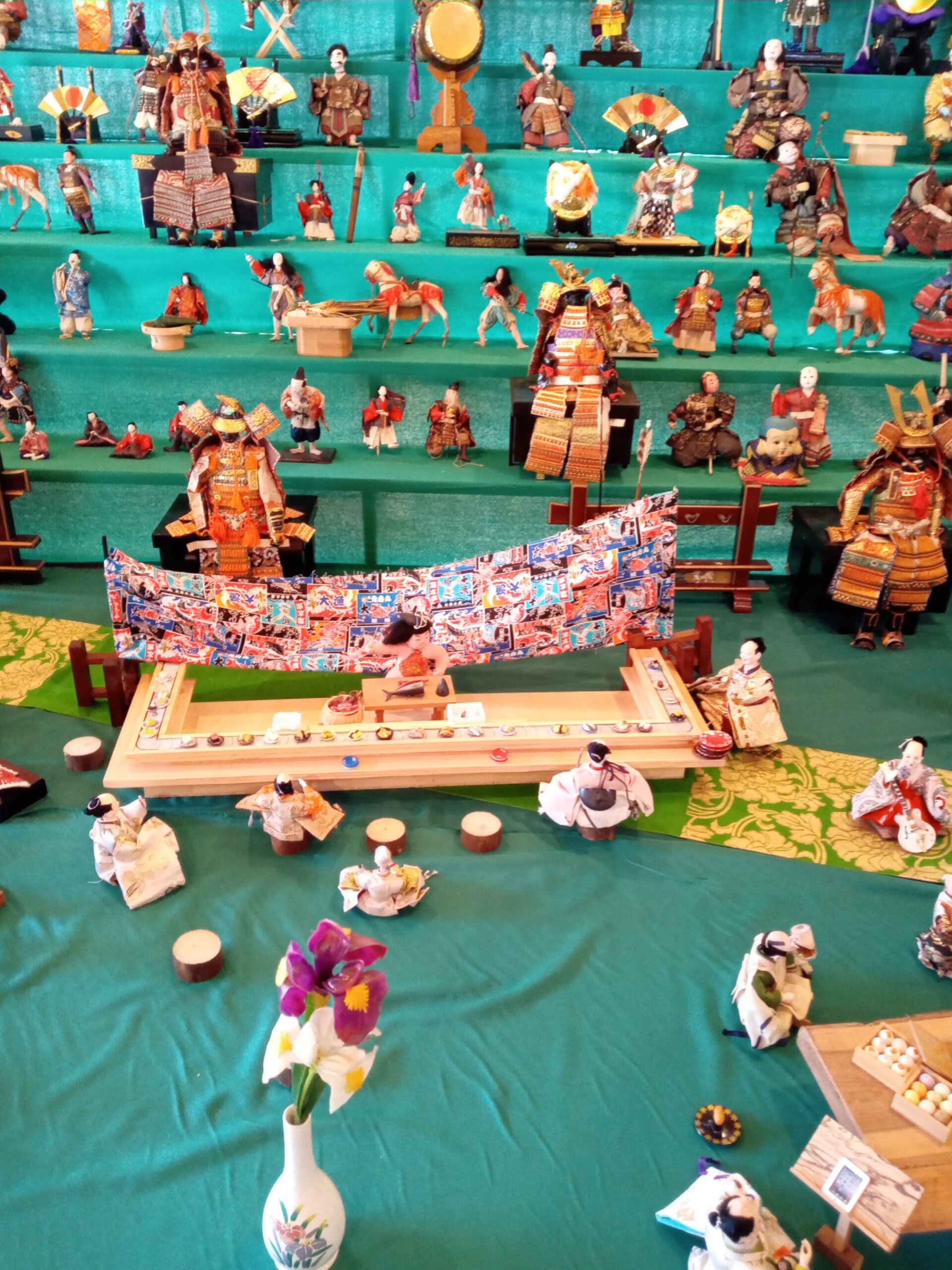
In the town I also found a tiered display of warrior dolls, set out ahead of Children’s Day in early May — a spring decoration true to the season.
3. The Kosatsuba and the Taste of the Town — Oyaki
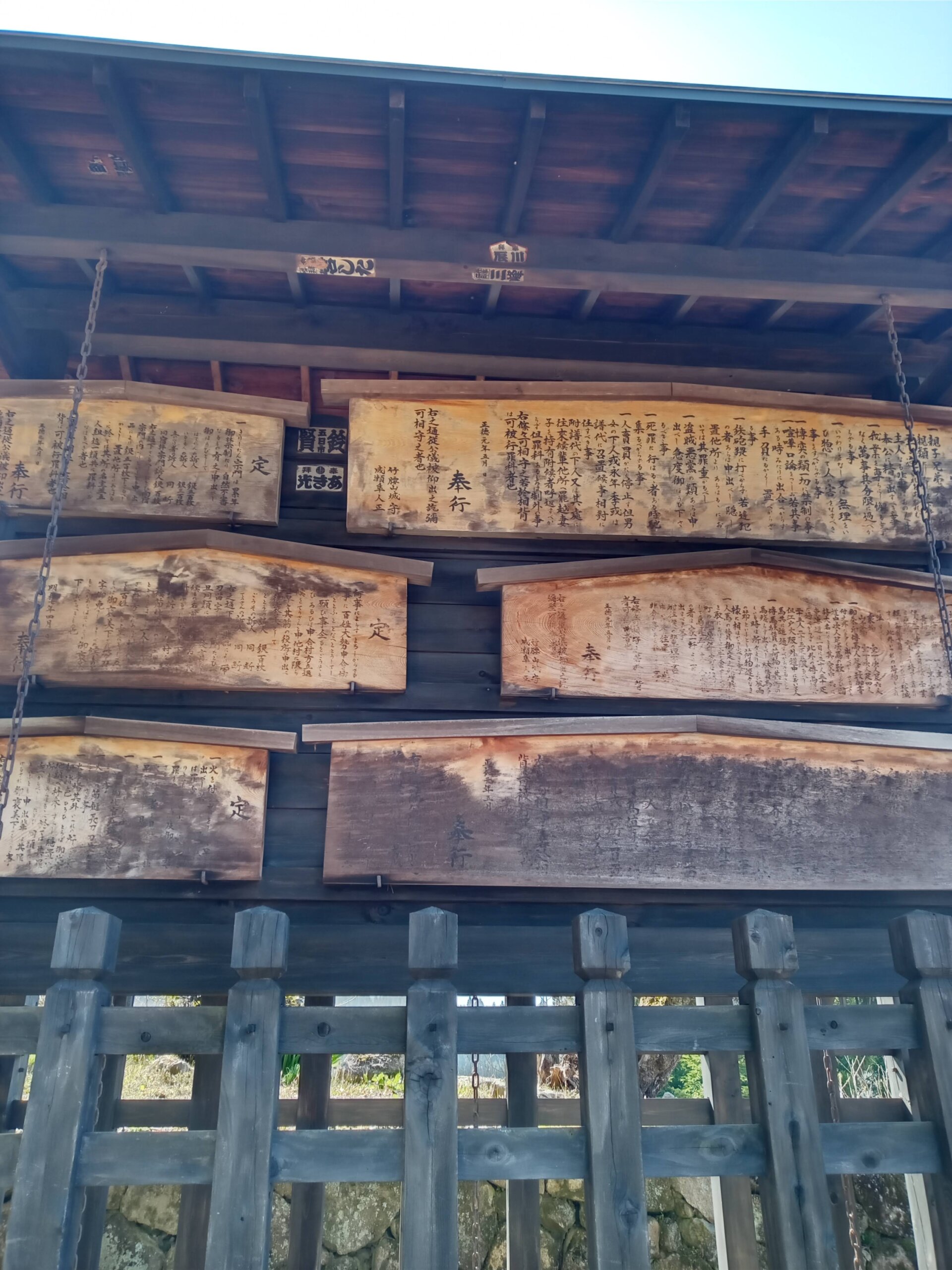
At the centre of the town stands the kosatsuba, the notice board where the shogunate’s proclamations were once posted in the Edo period. Looking at the boards, I could picture the town crowded with travellers in those days.
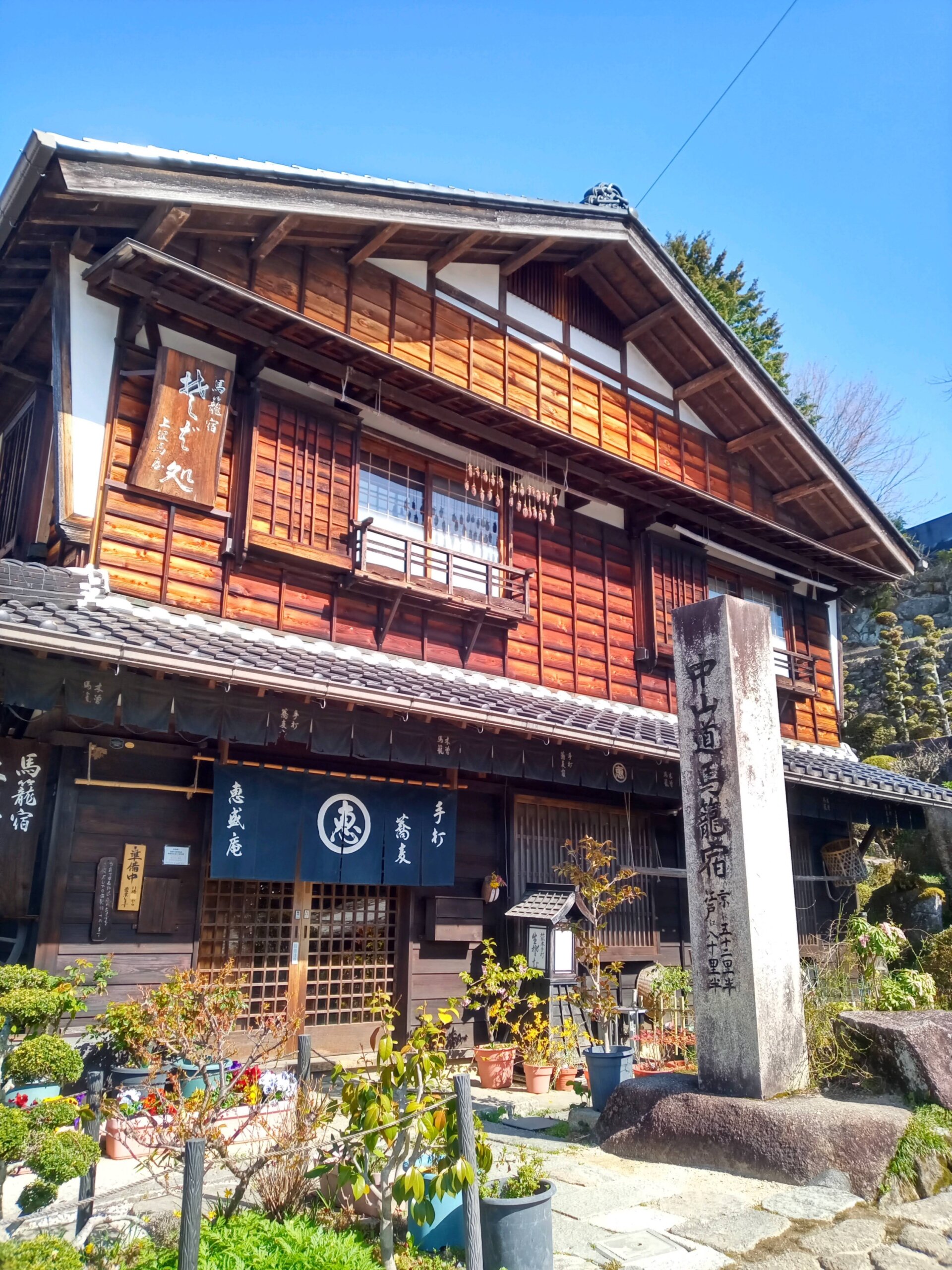
The stone monument inscribed “Nakasendo Magome-juku” is another landmark of the walk.
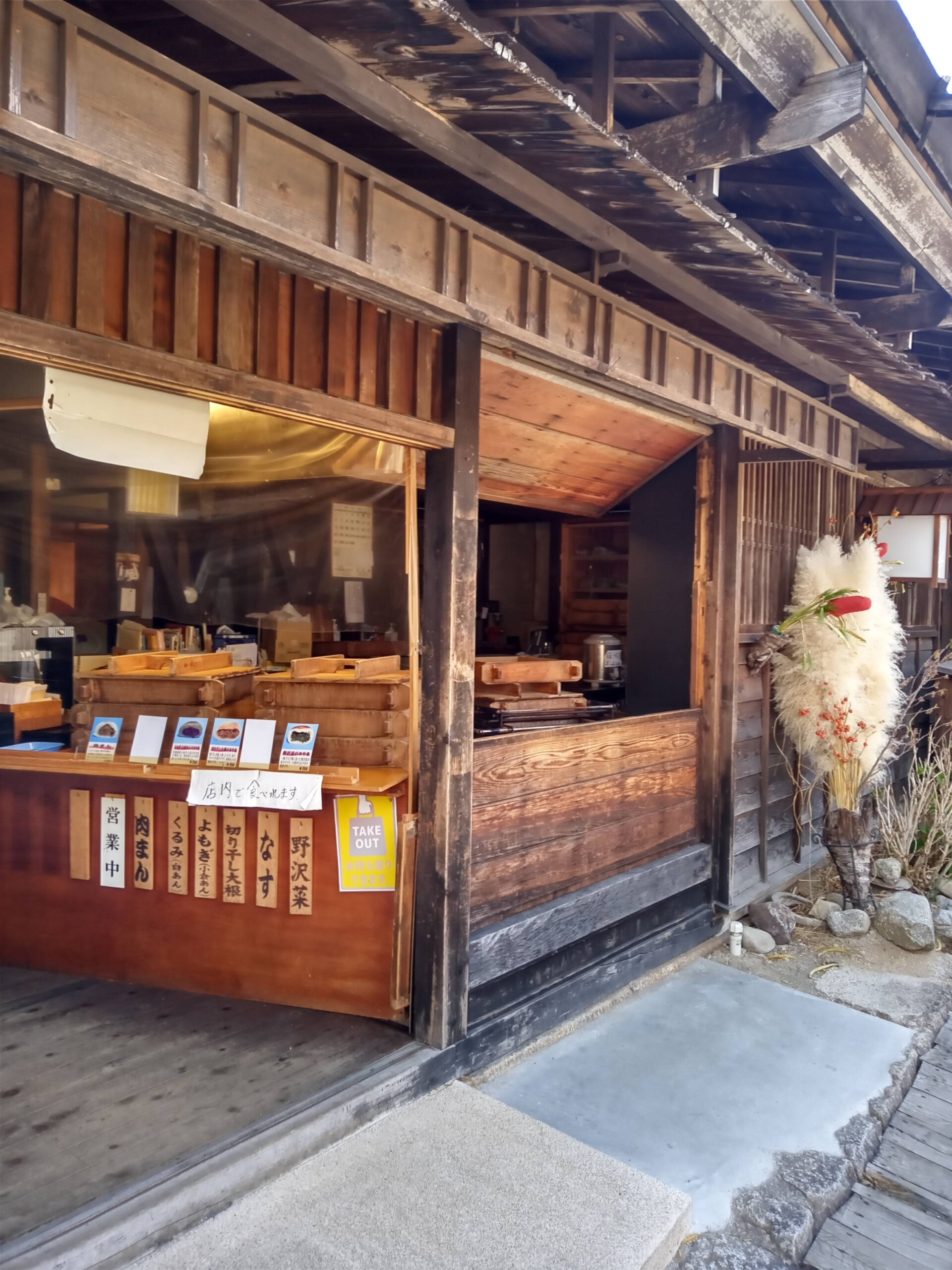
When you tire of walking, it is time for the taste of the town. Freshly grilled oyaki — a stuffed dumpling from the mountains — is the perfect food before crossing the pass. The soba restaurant Keiseian is also a good choice for lunch in Magome.
4. The Stone Path through the Forest and Magome Pass
Leaving the town, the road enters the forest. A stone-paved path runs on through the cedar woods — a landscape that has barely changed in hundreds of years, and a road of true Japanese natural beauty.
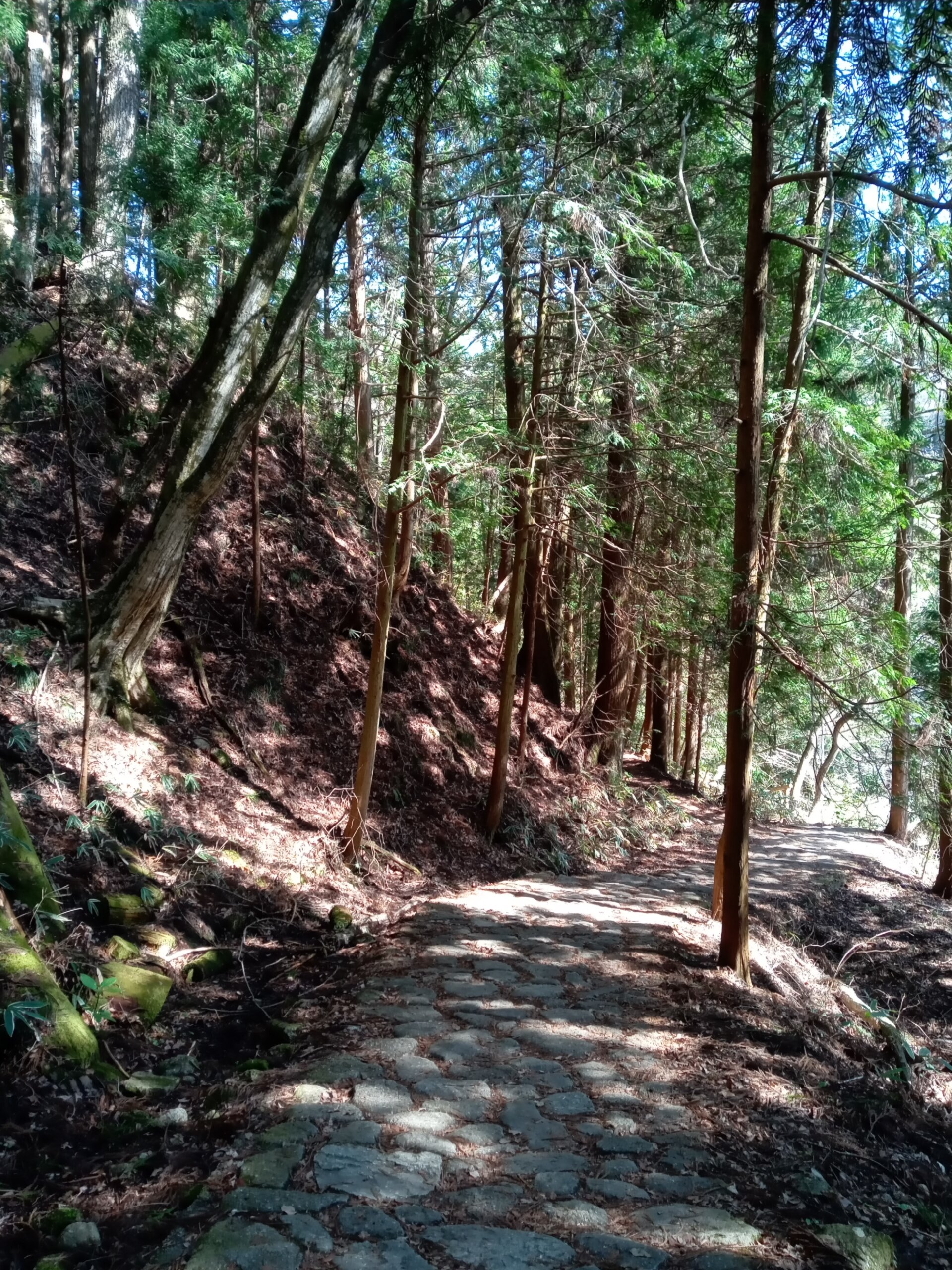
At last I reached Magome Pass, about 790 metres above sea level. This is also the border between Gifu and Nagano prefectures. Beyond the pass, the road turns downhill toward Tsumago.
5. The Ichikokutochi Tea House — Great Beams and a Sunken Hearth
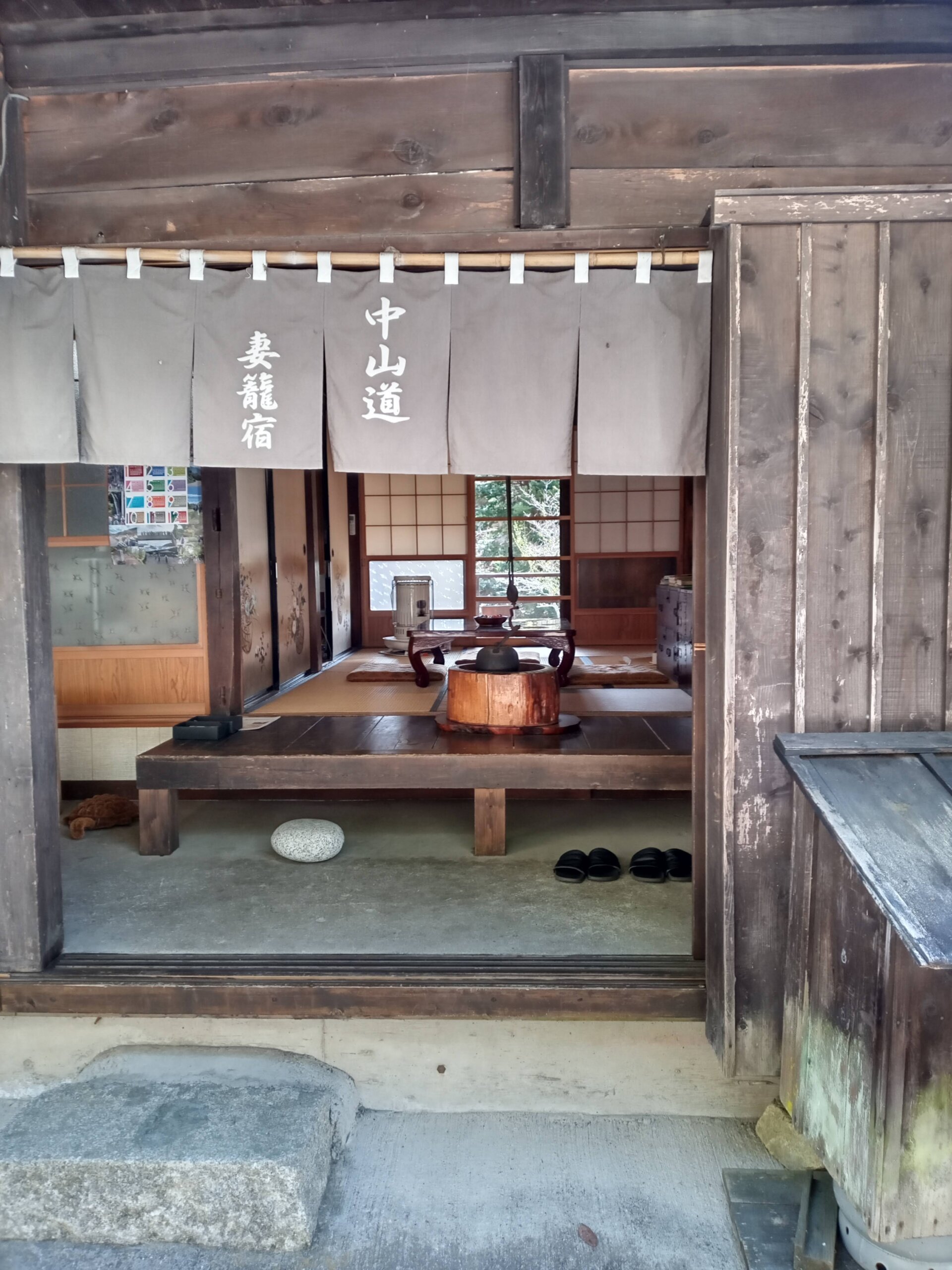
Beyond the pass stands the tea house at Ichikokutochi. The Edo-period building is still used as a free rest house, exactly as it was.
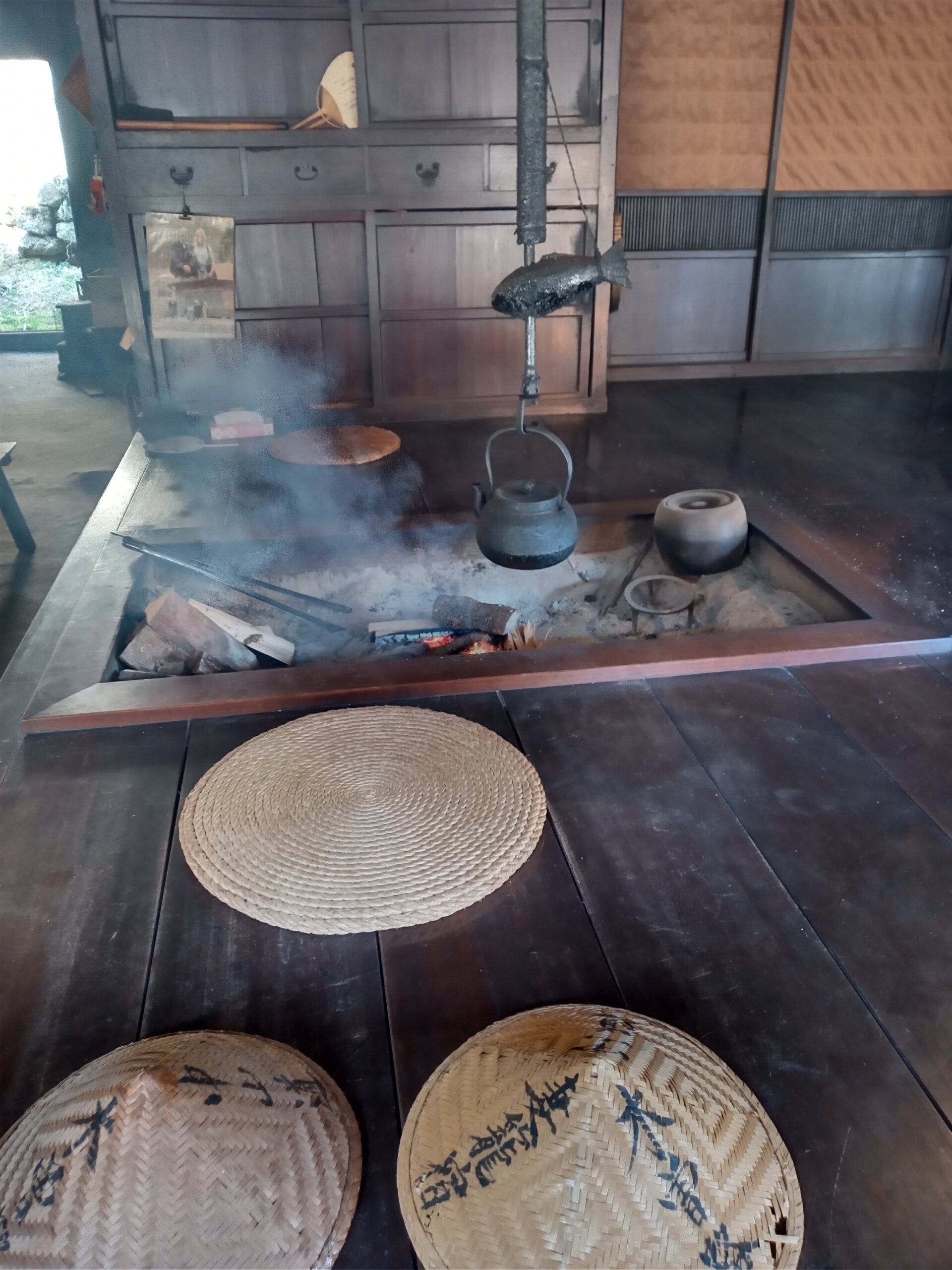
Step inside and the first thing you see is the fine Japanese carpentry: great wooden beams holding up the big roof, blackened by hundreds of years of smoke from the hearth. Those beams tell the history of this tea house.
An iron kettle hangs over the hearth, and tea is served to travellers. After crossing the pass, it was a moment of real relief.
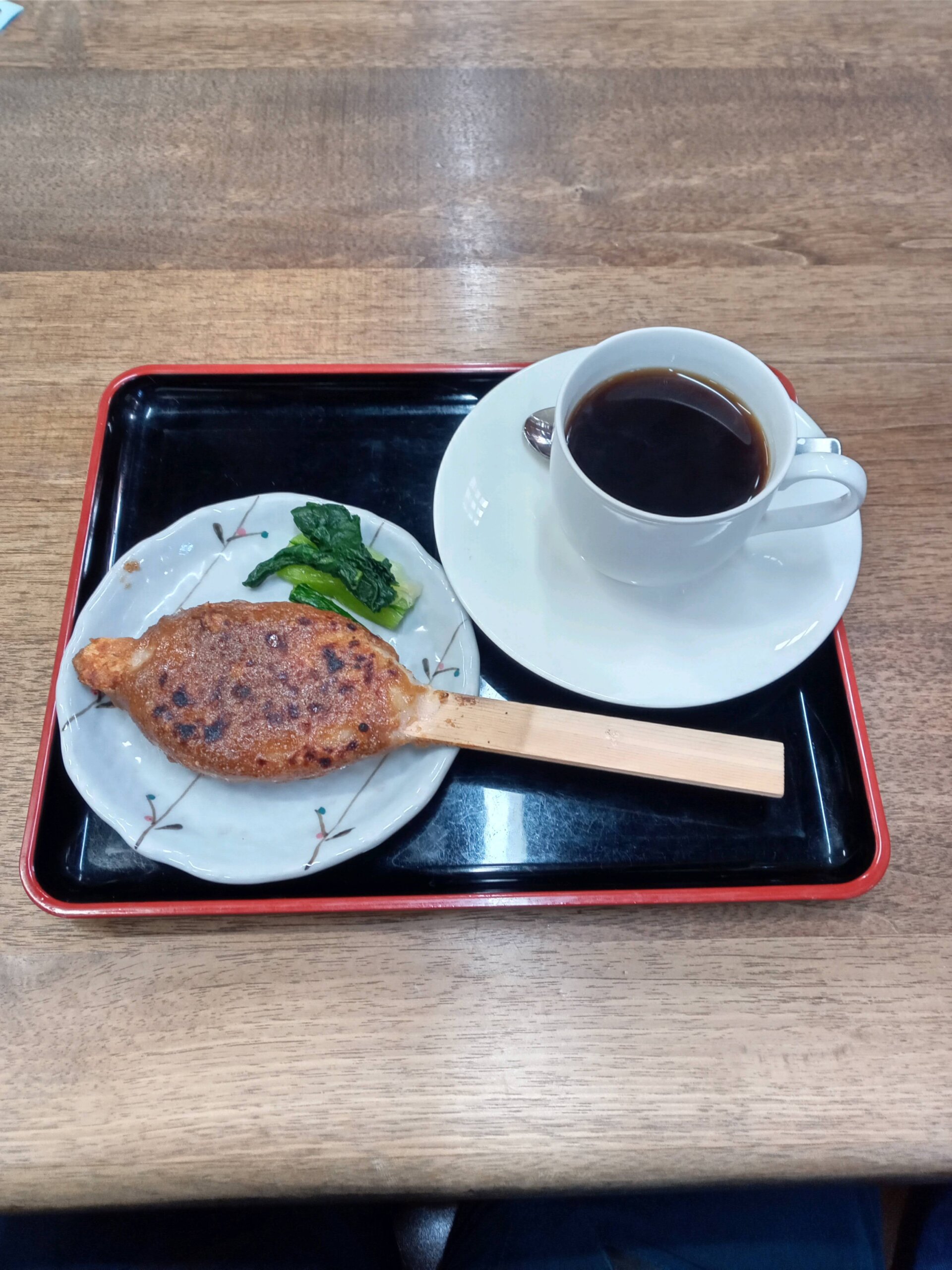
Do try the gohei-mochi, the local speciality — grilled rice cakes spread with a walnut or sesame sauce, a taste of the Kiso road.
Nearby are the ruins of the Shiraki checkpoint, where officials once controlled the timber trade in the Edo period, and a weeping cherry said to be about 250 years old.
6. Tsumago — The Other Post Town
Down from the pass lies Tsumago, a quieter post town with a different atmosphere from Magome. Its streets, which keep the look of the Edo period, are protected as a national Preservation District for Groups of Traditional Buildings.
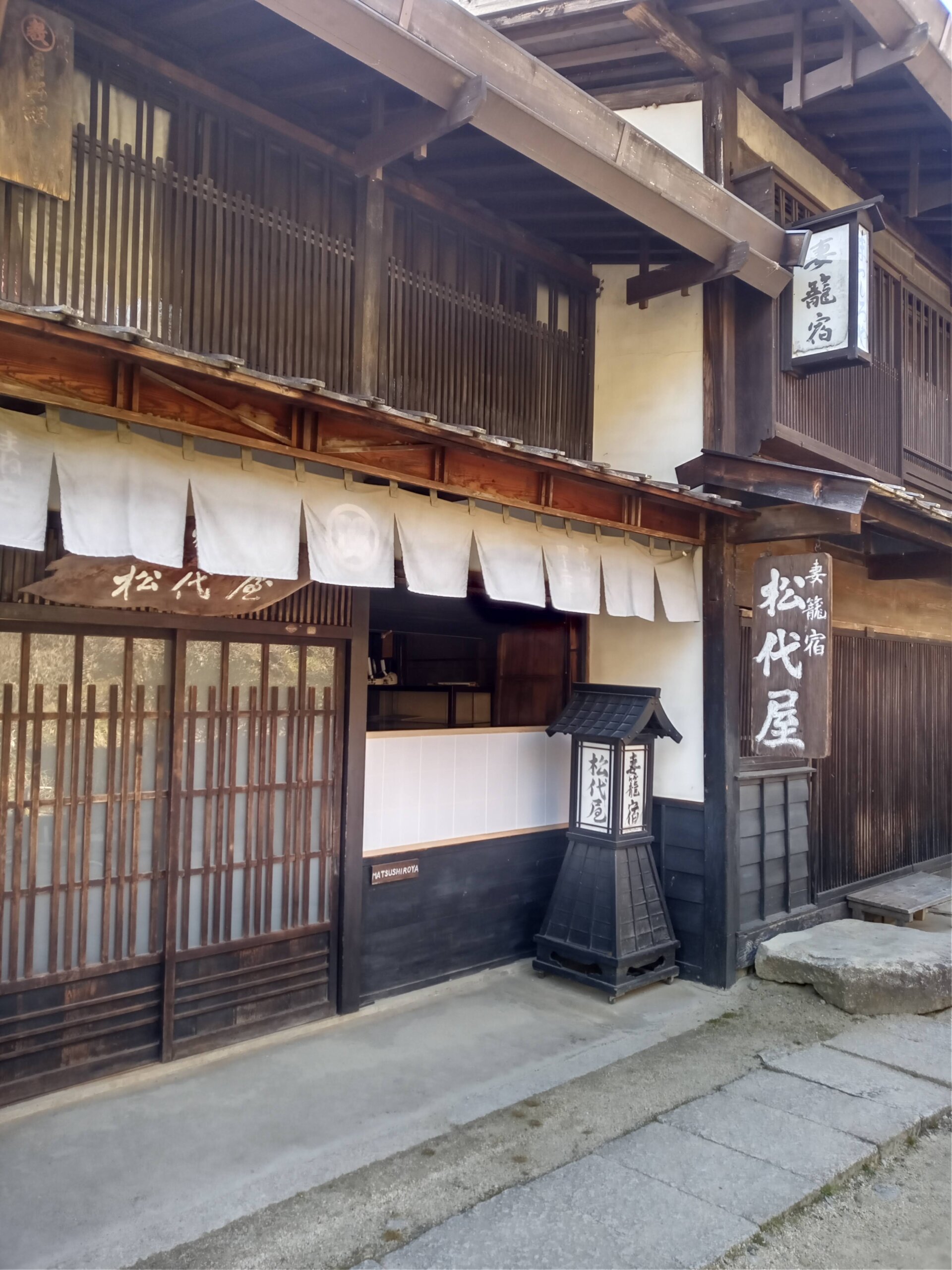
Noren curtains hang at the entrances of the inns. The life of the post town is still here.
At the edge of the town I found a mossy water place, with camellias and cherry blossoms in bloom — the quiet sound of water and spring flowers, a fitting end to the walk over the pass.
7. What Is the Nakasendo? — The Samurai Road
The Nakasendo was one of the five great highways of Edo-period Japan, joining Edo and Kyoto by a mountain route. Samurai, merchants and travellers walked it through 69 post towns, over a total length of about 530 km.
Today it is known to overseas travellers as the “Samurai Road,” and the Magome-to-Tsumago section is the most walked of all. Post towns and a mountain pass, a tea house and a forest — the further you walk, the more you feel like a traveller of the Edo period.
8. At the End of the Walk
Stone-paved slopes, a forest pass, a tea house with a hearth, and two post towns. The road from Magome to Tsumago packs the original landscape of Japan into a single walk. Next time, I would like to walk it in the autumn colours — and in the opposite direction, from Tsumago to Magome.
Getting there
- Take a bus from Nakatsugawa Station to Magome (about 25 minutes)
- Magome to Tsumago is about 8–9 km on foot, two and a half to three hours
- For the return, take a bus from Tsumago
- Walking from Magome to Tsumago is the easier direction, with more downhill than uphill
- The walk is at its best in spring, with the cherry blossoms, and in autumn, with the coloured leaves
Filmed: April 9, 2025
Music: “Pond” by Rafael Krux (CC0)
On my YouTube channel ORIBE, I post walking videos from all over Japan. Please take a look if you like. → https://www.youtube.com/@OribeNippon


コメント